=

Spread the Facts

Berlin and Brandenburg face a shared challenge: water is becoming a scarce resource across the region. At the same time, there are many starting points for making the region more resilient in the long term. Anyone seeking to advance water recycling as part of a future-proof water economy needs robust evidence, good examples and dialogue with the relevant actors. The Kompetenzzentrum Wasser Berlin (KWB), the Berlin Centre of Competence for Water, can provide important impetus here: it brings together research, practice and regional networks, and shows how water recycling can be put into practice step by step.

Berlin and the surrounding federal state of Brandenburg are among the driest regions in Germany. At the same time, the metropolitan region has seen strong population growth since German reunification. Water availability is coming under pressure, while demand continues to rise. The Kompetenzzentrum Wasser Berlin (KWB), a research institution whose owners include Berlinwasser Holding, which is itself partly owned by Berliner Wasserbetriebe, has developed, within the WaterMan project, a strategy for how research, specialist expertise and regional networking can help advance water recycling in Berlin-Brandenburg and strengthen the region’s water resilience.

Hard facts about an increasingly dry region

The figures make the situation clear: Berlin and Brandenburg need to prepare for changing conditions in the regional water balance. Falling precipitation and rising water demand in both the city and its surrounding areas show that water will need to be used more carefully in future. Adding to the challenge is the structural transformation in Lusatia, in southern Brandenburg and Saxony. For decades, large amounts of groundwater were pumped out there to keep the lignite mines dry. “This coal extraction is due to end by 2038, and with it the constant inflow of this water into the Spree, the largest of Berlin’s rivers, will also cease,” says environmental engineer Pia Schumann, who worked on the WaterMan strategy together with her colleagues at KWB. For the metropolitan region, water demand is projected to rise from around 273 million cubic metres per year today to roughly 322 million cubic metres per year by 2050, an increase of around 18 per cent. In addition, Berlin’s Master Plan Water assumes that, with significantly lower groundwater recharge, additional demand in Berlin alone could reach up to 55 million cubic metres per year. Across the region as a whole, additional or replacement demand of around 50 to 100 million cubic metres per year is expected.

With the Berlin Master Plan Water, the German capital has already created a strategic framework for responding to these developments. It sets out which measures may be needed to secure water supply in the long term and make Berlin more resilient to dry periods and declining water availability.
Against the backdrop of rising demand and declining availability, Berlin, Brandenburg and Saxony are also jointly examining a wide range of options, from large-scale approaches such as pipelines for desalinated Baltic Sea water or water from reservoirs in the low mountain ranges to local and regional solutions. These include targeted groundwater recharge, measures to reduce water demand, blue-green infrastructure that allows rainwater to infiltrate on site, and the reuse of treated wastewater near treatment plants. Local measures in particular are seen as promising, because they are often easier to implement and require fewer actors to be involved.

This is exactly where water recycling comes in as a pragmatic building block. Drinking water should be used above all where drinking-water quality is genuinely required. Where that quality is not needed, and where local conditions allow, treated wastewater from existing plants, as well as treated rainwater and greywater, could be used in future, for example in agriculture, in industry, or to irrigate urban sports grounds and green spaces. Water recycling is already being tested in Berlin and Brandenburg by different actors and in different fields of application, including agricultural irrigation and greywater recycling. Alongside KWB, other active players include the German Environment Agency and Berliner Wasserbetriebe. One practical example is Hobrechtsfelde, where treated wastewater from the Schönerlinde treatment plant is returned to the landscape to support rewetting. KWB’s research builds on exactly this kind of local experience.

The strategy KWB developed within the WaterMan project follows the fit-for-purpose principle. The key questions are therefore these: Which water quality is needed for which use? Which potential users come into question – farms, for example, or industry? From which source can the water be supplied, and how would it need to be treated?

Or, put more simply: who needs which water, where?

Within WaterMan, KWB focuses in particular on treated wastewater. In a city like Berlin, which uses around 600,000 cubic metres of drinking water a day, treated wastewater is available very reliably and in large volumes as the output of wastewater treatment plants. “One key project in our work within WaterMan is therefore a feasibility study that we prepared around the Ruhleben treatment plant,” Schumann explains. It is one of the largest inner-city wastewater treatment plants in Germany and is located in the direct vicinity of a commercial area. Because of new legal requirements, the plant is being expanded so that nutrients and trace substances can be removed more effectively in future, improving the quality of the treated effluent. This reduces the additional technical treatment effort that would be required for possible reuse.

To start the dialogue with potential users of treated wastewater, all businesses in the surrounding area were first identified, followed by a screening and prioritisation based on expected water demand in order to identify the most relevant user groups. On this basis, more than 20 companies were approached directly. The discussions showed general interest, although no concrete use cases emerged initially. A car wash and the neighbouring power plant were identified as particularly relevant, since higher water demand can be expected there than in other businesses. These two possible applications were therefore looked at more closely.

A strong willingness to use treated wastewater

In the rural surroundings of Berlin, there is already a strong willingness to engage with water recycling – especially among Brandenburg’s water suppliers. The municipality of Stahnsdorf approached Berliner Wasserbetriebe on its own initiative, and Berliner Wasserbetriebe in turn commissioned KWB to examine the potential of the local treatment plant for water recycling in greater detail.

The KWB team did not need long to think about it. This was a valuable extension of the feasibility work being developed within WaterMan and intended to feed into KWB’s broader water recycling strategy. For Brandenburg, irrigation during the vegetation period could become the central future use case. It can be expected that water shortages will occur more frequently during exactly those periods. At the same time, treatment plants in the Berlin hinterland, as well as in Brandenburg’s larger towns, continuously provide significant volumes of treated wastewater. What matters most, however, is proximity. Water recycling makes most sense, and becomes economically attractive, where treatment plants and potential users are located close to one another. Building new pipelines is a major cost factor and can quickly call a project’s economic viability into question.

Creating shared foundations for implementation

If water recycling is to be implemented on a broad scale in Berlin and Brandenburg, it will take more than technical solutions alone. It will also require trust, clear responsibilities and coordinated procedures. At the same time, the starting conditions differ. In Berlin, Berliner Wasserbetriebe provides one large central actor. In Brandenburg, by contrast, many local water and wastewater associations, municipalities and authorities are involved. That makes coordination more demanding, but it also creates opportunities for solutions that are well tailored to local conditions. The task now is to pool experience, standardise procedures and strengthen knowledge transfer between the actors involved. An important step in this direction is the draft DWA-M 1200 guidance sheet published in July 2025. It brings together existing technical knowledge on water recycling and is intended to provide guidance on planning, operation, risk management and permitting. This is precisely where KWB can make an important contribution through application-oriented research, risk assessment and practical feasibility studies.

Overall, the legal framework for water recycling in Germany is still evolving. First, the Federal Water Act must be amended. This will then be followed by national implementation of the EU Regulation on water recycling in agriculture, 2020/741, in the form of a federal ordinance on water recycling. The EU Regulation already sets requirements for agricultural irrigation with treated water and defines different quality classes for it. From a practical point of view, it would be helpful if national implementation also included other uses, such as urban water recycling, with suitable quality requirements. The DWA-M 1200 guidance sheet already provides important technical orientation here. The revised EU Urban Wastewater Treatment Directive also points in this direction. Where appropriate, member states are to strengthen the reuse of treated wastewater from municipal treatment plants systematically, especially in areas under water stress. At the same time, higher requirements for effluent quality can help make water recycling easier and more cost-effective in future, because fewer additional treatment steps will be needed.

A task for communication and policy design

More generally, getting water recycling off the ground is also, to a significant extent, a task for communication and policy design. KWB therefore devotes a great deal of time to stakeholder dialogue and prepares workshops, guidelines, infographics and other materials to create transparency and build acceptance. “If we want to convince more people locally as well, what we need above all are practical examples that show feasibility, and a business model that makes the use of recycled water worthwhile,” says Schumann. This was also the clear message of a webinar shortly before Christmas 2025, in which she and her colleagues presented current findings on water recycling to around 30 members of the professional community.

Pilot measures, workshops and stakeholder dialogue

KWB’s approach shows how water recycling in a Central European capital region can be shaped today: in a differentiated, technically robust and practice-oriented way, and in collaboration with relevant stakeholders. KWB’s core competences include the assessment of microbial and chemical risks as well as advanced water treatment. With the feasibility studies for the Ruhleben and Stahnsdorf treatment plants, KWB has laid important groundwork as a contribution to a future-proof and resource-efficient approach to water in the region.

KWB will continue to examine critical points at several sites and derive transferable findings for the implementation of water recycling. Ongoing direct exchange with practitioners is a key part of this. In particular, KWB aims to further expand its network in Brandenburg and continue the dialogue there. Further events and workshops are already being planned jointly with regional authorities, on topics such as risk assessment and risk management. At the same time, KWB is working on several research projects and project applications on water recycling in order to address open questions and advance new use cases in Berlin-Brandenburg and beyond. One example is ValidReuse. The project aims to make validation of water treatment systems for water recycling easier in Germany. Its results are intended to ensure that operators and authorities have greater planning certainty, that approval procedures are simplified, and that the findings feed into the further development of DWA-M 1200 as well as the national implementation of EU Regulation 2020/741.


About the “WaterMan” project

Due to climate change, periods of drought are becoming more frequent in the Baltic Sea Region and drinking water, which is mainly obtained from groundwater here, can get scarce in certain periods. For that reason it will be necessary to use water of different qualities and to tap into other sources of “usable water” in the future. “WaterMan” supports municipalities and water companies in adapting their strategies. A region-specific approach to water recycling uses the alternation of too much and too little water, which has become typical in the Baltic Sea Region, to make the local water supply more resilient.

More information: interreg-baltic.eu/project/waterman/
Braniewo in Poland shows the potential of small towns to take the lead in water recycling. Where distances are short, there is often greater room for flexibility. Committed local stakeholders can get started more easily and receive hands-on support from the administration – not least when it comes to making use of policy windows at national level. All of this is brought together here in a classic local strategy paper with a clear objective that provides orientation.

How far Braniewo has come is evident from the fact that its model strategy for water recycling has already taken shape in the form of a published document. It exists in printed and bound form. More than that: the 70-page document, developed and finalised with the participation of local stakeholders in public workshops, has already been adopted by the town council. It is already feeding into concrete policy processes. The fact that the strategy is so convincing and already having an impact is also due to the concrete evidence it can draw on from two pilot measures. These were developed in cooperation between the municipality of Braniewo and the Department of Environmental Engineering at Gdańsk University of Technology under the leadership of Magdalena Gajewska. Braniewo’s model strategy grew out of these pilot measures and the process surrounding their development – which, incidentally, is very typical of the WaterMan philosophy: just get started. It is often only through concrete measures that it becomes truly clear how the overarching strategy needs to be designed, oriented and sharpened. So here, too, it makes sense to begin with a brief look at these activities.

Education is crucial to establish the issue in urban society

One example is the new rain garden on the car park of the public swimming pool. What looks like a simple planted area with shallow depressions is, in fact, a smart retention system that captures rainwater from the adjacent asphalt surface, stores it temporarily, releases it in a controlled way, and thus contributes to groundwater recharge. And that is not all: a rain garden like this also helps to prevent flood events on the Pasłęka River and to cool the microclimate on hot, dry summer days. Braniewo has indeed seen more and more of those intensely hot days in recent years, and they have already led to short periods of water scarcity – something that is also explained on information boards next to the installation. The installation has been consciously designed as a learning site. Water and climate education are essential if water recycling is to become firmly established in urban society.

Only a few metres away, in the technical room of the swimming pool, the other pilot is located. There, alongside the filtration system, a new installation has been added that recycles the backwash water for municipal purposes. The idea is to use it as fit-for-purpose water for cleaning the sewer network and, in the future, perhaps also for irrigating the neighbouring sports field. This pilot is a genuine pioneering achievement. Recycling swimming-pool water has never before been systematically tested. Even after intensive research, no examples or models could be found anywhere in the world to build on. So Braniewo moved ahead and, in the interest of transferability, carefully documented all operational data and made it transparent. The team is already thinking beyond the pilot, identifying scaling options and highlighting which operational processes should be taken into account in the planning stage of future public buildings. Where reservations remain about irrigation with recycled water – for example on the part of the grass supplier to the local football club – Braniewo is relying on dialogue and on the growing body of evidence emerging from day-to-day operation.

Linking technical solutions and communication tasks through holistic governance

The school classes that arrive here every day by bus for swimming lessons and learn about the two water recycling pilots from the information boards are already easier to win over today. After all, the benefits of the pilots are easy to grasp. Jerzy Butkiewicz, who is responsible for water issues in the municipal administration and coordinates the pilot measures within the model strategy, emphasises the importance of the educational aspect: “Children can become ambassadors for water recycling at home and can also convince their parents.” Butkiewicz, who has already coordinated the work on the pilots on site in his characteristically engaged and hands-on way between the university team and the technicians, is also responsible on the municipal side for bringing the different activities together in an overarching water recycling strategy for Braniewo. It links communication tasks with technical solutions through holistic municipal coordination and governance.

The starting point for all of this was an analysis of local risks: ageing sewer sections, more frequent heavy rainfall with a risk of flooding on the Pasłęka River, but also increasingly frequent dry spells in which water becomes scarce. Braniewo is responding through its first two pilots with targeted measures that range from low-tech solutions to more complex challenges and pioneering achievements. These are complemented by incentives for private water retention and educational activities that make water tangible as a resource. The approach is one of small but effective measures that can be scaled up step by step – guided by clear priorities and measurable results.

Being ready with a model strategy when funding windows open

A decisive advantage here lies in the strategy’s firm institutional anchoring. The findings from the pilots and workshops are feeding, among other things, into the municipal climate adaptation plan, which larger municipalities in Poland will soon be required by the national government to prepare. In this way, they are also becoming part of the City of Braniewo Development Strategy 2021–2030, creating a binding foundation for future construction and infrastructure projects. More generally, it is a considerable strategic advantage that Braniewo’s water strategy is already in place before the national climate planning procedure begins. This will work in favour of local implementation: when the funding windows associated with the climate plan open, the municipality will be able to position key measures early and secure financing more easily. Eligibility for funding at national and European level remains, after all, a decisive factor: it usually gives administrations planning certainty and additional room for manoeuvre, and helps political decision-makers move towards concrete decisions.

“The strategy helps us bring many individual solutions under one roof – from the rain garden to the climate plan,” says Butkiewicz. “That makes it easier to show the council, the administration and funding bodies how everything fits together.”

The fact that the local water recycling strategy exists as a printed and bound publication is, on the one hand, a sign of its strength. On the other hand, municipalities are also places where even the best plans can all too easily end up in a drawer. Once again, it is up to Butkiewicz, as the person responsible for water issues in the municipality, to make sure that does not happen. Instead, the strategy now has to be implemented step by step. The climate plan required by the government will help with that, but above all so will Butkiewicz’s determination: “I want to find a way to get through to the city council, and money plays an important role in that. At the same time, it is crucial to work with the public. As soon as citizens begin to engage and the issue gains more visibility, the city council will respond as well.”

How paper turns more and more into water recycling in practice

That is why Braniewo continues to rely on transparent communication and public workshops: it involves local stakeholders early on, builds acceptance, and provides the visible anchor projects that root the strategy in everyday life. In this way, a shared learning process is taking shape across the town – and paper is increasingly turning into water recycling in practice. In this combination of real pilot installations, political anchoring and broad communication, Braniewo’s model strategy is a blueprint for the whole Baltic Sea Region.


About the “WaterMan” project

Due to climate change, periods of drought are becoming more frequent in the Baltic Sea Region and drinking water, which is mainly obtained from groundwater here, can get scarce in certain periods. For that reason it will be necessary to use water of different qualities and to tap into other sources of “usable water” in the future. “WaterMan” supports municipalities and water companies in adapting their strategies. A region-specific approach to water recycling uses the alternation of too much and too little water, which has become typical in the Baltic Sea Region, to make the local water supply more resilient.

More information: interreg-baltic.eu/project/waterman/
Looking at Lithuania’s national climate data, one might assume that droughts and water scarcity are issues for the distant future, not for the present – especially in such a humid country. Yet the Klaipėda region chose to think ahead and act early. In numerous stakeholder dialogues, it became clear that farmers in the local area had already experienced periods of shortage. That is how a pioneering project came about in Gargždai: Lithuania’s first retention pond with an extraction point – and the country’s first real step into water recycling.

There is a gap between national climate monitoring and the particular relationship farmers have with the weather. It is rarely their best friend, often a difficult partner, and sometimes their greatest enemy. While ministries and research institutions analyse tables and calculate projections, farmers are out in the fields every day, feeling the wind on their faces. Or rather: in recent summers, they have increasingly felt a noticeably hotter sun on their faces, the air standing still and water reserves gradually drying up. Even if nationwide climate data did not yet register a problem, water scarcity was already a reality at local level in the Klaipėda region on Lithuania’s southern coast – albeit within a limited area and for limited periods of time.

The fact that this issue received a certain degree of attention at higher levels at all, and that the affected farmers did not have to deal with it entirely on their own, is due to the commitment of the Association of Klaipėda Region Municipalities. In the truest sense of the phrase, it set out across the region, in cooperation with researchers from Klaipėda University, to explore local conditions in greater depth: carrying out more detailed climate and water analyses and, above all, engaging in a broad process of exchange and participation with local stakeholders. The aim was not only to consider the scientific evidence that feeds into tables and calculations in the form of averages, but also to take anecdotal evidence seriously in a systematic way: to listen to what farmers had experienced, to ask what local water utilities and municipal representatives had to say, and to bring them all together around one table for an open exchange.

Systematically capturing anecdotal climate data

The field research was led above all by Valdas Langas and Vytautas Bernadišius of Klaipėda University. The picture that emerged is, in fact, quite typical of the Baltic Sea Region: overall supply is not at risk on average over long periods of time. But viewed locally, both flooding and drought periods, as well as temporary bottlenecks, are already becoming more frequent. “The systematic capture of anecdotal data has enabled us to turn isolated observations into an overall assessment of the situation,” explains Langas. “On this basis, we can derive concrete priorities for the coming years.” And this includes not only further efforts in flood protection, but also initial pragmatic steps towards water recycling.

Pragmatic, in this context, means beginning with water recycling on a small scale and with simple, obvious measures that can be implemented easily. As a complement to existing supply, not as a substitute. Nor is the aim to achieve drinking water quality, but rather to provide fit-for-purpose water in different quality levels that can be used in agriculture or for municipal services such as street cleaning or the maintenance of green spaces, thereby relieving the drinking water supply of these uses. Instead of trying to tackle many conceivable solutions at once, the region is deliberately focusing on simple, robust measures that can have an effect without long lead times and that enable institutional learning curves. Retention ponds at critical points, the targeted use of rainwater and wastewater for purposes that do not require drinking water quality, and visible demonstrations form the starting point. In this way, a gradual ramp-up is taking shape that conserves resources, creates confidence in action, and brings the issue of water recycling into the public debate.

A great deal of awareness-raising and the courage to become the first municipality to build practical experience

That said, “easy to implement” is a relative term in a country where water recycling has so far not been a topic at all, and where the debate has focused primarily on flooding. In this respect, the first project now being driven forward by Valdas and his team was truly a pioneering effort in Lithuania’s national context. At the same time, the project turned a problem into an opportunity. For a carefully selected site in the municipality of Gargždai, a flood retention pond was planned that would also include an extraction point. Until now, retention facilities in Lithuania have been used primarily for flood protection and flood control. Gargždai was now to show how safety infrastructure could also become a supply solution – and at only marginal additional cost. “We did not just want to drain the water away; we wanted to see it as a resource – something valuable that could be reused,” explains Langas.

When it came to building the retention pond and implementing the technical solution for water recycling, the team was able to draw, among other things, on the example of WaterMan partners in Västervik, Sweden, who have been creating “Multi-dams” with water extraction points for years. Close professional exchange was also helpful with regard to monitoring strategies, testing parameters and operational issues. The real pioneering dimension of the retention pond in Gargždai, however, lay above all in the legal framework within Lithuania’s national context. “Water recycling is not yet anchored in Lithuanian legislation,” says Mindaugas Šatkus, who oversaw the practical implementation of the project for the municipality together with his colleague Feliksas Žemgulys. Before the first excavator could move in, the two of them first had to lay the legal groundwork. “There were fundamental questions that had to be clarified – legally, technically and organisationally.” EU Regulation 2020/741 does apply to Lithuania’s agriculture and municipal wastewater, but its application to rainwater and municipal uses has not yet been regulated. The whole issue of water recycling remains underdefined in Lithuania. For Gargždai, that meant many discussions, a great deal of awareness-raising, and the courage to become the first municipality to build practical experience.

Water recycling is no longer an abstract term, but a pond and a pump

Since early 2025, the new retention pond has been in place: more than 7,000 square metres in size. It was created in a popular area near a football pitch and cemetery, right in the middle of a well-used local recreation zone. This particular location is no more a coincidence than the fact that the site has not been fenced off. “We did not want to create an enclosed technical site, but to apply the other principles of our model strategy at the same time,” explains Mindaugas Šatkus, who managed the project for the municipality. For him, the project is also about visibility, transparency, information and public outreach.
The retention and recycling pond has therefore been deliberately designed as a demonstration site. With the help of information boards and through on-site visits and training formats, the growing problem of water scarcity and the possibilities of water recycling as a response can be explored here in a particularly tangible way. Wherever water recycling is new – and that is almost everywhere in the Baltic Sea Region – the first task is to reduce psychological barriers and build trust. Outside agriculture, many people are not even aware that, below drinking water quality, there are further EU-defined quality classes for fit-for-purpose water that are entirely safe for many uses, even where people come into direct contact with it. That is why this site is also meant to show how quality is safeguarded through sampling plans, including for E. coli, turbidity and conductivity. A place of learning has been created around the retention pond, one in which knowledge will be able to flow in future – about hydrology, ecology and climate adaptation. The municipality is also active on social media.

“Since we have been able to show people what water recycling looks like in Gargždai, it is no longer an abstract term for many of them, but a pond, a pump and a hose – something they can understand and touch.”

The thorough preliminary work carried out through the stakeholder dialogues also provides a sound basis for deciding where action could and should come next. Districts such as Šilutė and Kretinga are under particular pressure, with recurring agricultural distress and high irrigation demand during drought periods. At the same time, most municipalities in the region – with the exception of the city of Klaipėda – still lack concrete plans for water recycling. If retention ponds with extraction points were available there too, as they now are in Gargždai, farmers could draw on these sources during dry periods without placing additional pressure on public networks at times of peak demand.

Standardise, scale up, and refine the rules

In future, such ponds are to be created deliberately as buffers for water supply at suitable sites, for example near public facilities such as schools, sports grounds or municipal depots. The strategy envisages developing usage concepts for them that take account of potential off-takers, legal requirements, and key technical and logistical parameters. It also calls for standardised extraction solutions, clear rules on quality and liability, and exchange with national authorities and partner regions – so that the first experiences with water recycling can lead to a more consistent practice across Lithuania as a whole.
Economically, recycled water can be cheaper than drinking water, provided the legal framework allows for it. Valdas Langas’s model strategy therefore argues for clear legal rules beyond agriculture as well, for example for municipal services and industry. A legal framework defining standards for quality, liability and responsibilities would also be helpful, whether it is established at European or national level.

Politics moves slowly; the weather is changing faster in some places

The wheels of politics turn slowly, while weather patterns in parts of the country are changing much faster. That is why the Klaipėda region is, for the time being, taking matters into its own hands – actively encouraging the construction of more water recycling measures, continuing to involve municipalities, and defining roles and responsibilities: technical departments prioritise sites, utilities operate the infrastructure, municipalities and the region communicate, and university partners support the evaluation.

Building on the involvement of all municipalities and utilities that has already taken place, the region is now putting in place a more binding form of coordination. Roles and responsibilities are clearly defined: municipalities and technical departments prioritise measures, utilities operate the infrastructure, and national authorities and specialist institutions provide data, regulation and technical guidance. On the basis of municipal surveys, documented drought events and available water statistics, needs, risks and potentials are regularly assessed and reflected on together with the actors involved. In addition to demonstration projects, the strategy foresees guidelines and rules, further scientific studies, and exchange with the Ministry of Environment and other national actors. In this way, experience gained from initial applications can feed into the further development of legislation and into an increasingly consistent water recycling practice.

Take local experience seriously – and get started

What has been developed in Lithuania, and is continuing to evolve there, is a model strategy in the best sense of the term. It can become a model for many regions around the Baltic Sea where water recycling has so far played no role: start with what is relatively easy to implement. Retention ponds for flood protection are an established concept across the Baltic Sea Region. In times of climate change, this region is defined precisely by the seasonal alternation between too much and too little water. By adding one small extra – extraction points – these urgently needed retention ponds become an effective buffer that can significantly relieve the drinking water system during periods of scarcity. Could wastewater recycling also become an option in Lithuania one day? That is certainly possible. For now, however, the analysis by Valdas Langas, Mindaugas Šatkus and Feliksas Žemgulys suggests that rainwater recycling can already take this still very humid region a long way.

Taking local experience seriously – and getting started – is, in a sense, the strategic core message of the WaterMan project. In the Klaipėda region, that message has been understood and implemented in exemplary fashion. This pioneering effort has, for the first time, embedded water recycling systematically in the regional agenda and laid a solid foundation for further pragmatic steps.


About the “WaterMan” project

Due to climate change, periods of drought are becoming more frequent in the Baltic Sea Region and drinking water, which is mainly obtained from groundwater here, can get scarce in certain periods. For that reason it will be necessary to use water of different qualities and to tap into other sources of “usable water” in the future. “WaterMan” supports municipalities and water companies in adapting their strategies. A region-specific approach to water recycling uses the alternation of too much and too little water, which has become typical in the Baltic Sea Region, to make the local water supply more resilient.

More information: interreg-baltic.eu/project/waterman/
Because of recurring droughts and its already limited groundwater reserves, the question in Västervik, Sweden, is no longer whether water recycling is needed, but how best to do it. And even that question has now largely been answered. The municipality has made a clear strategic choice in favour of one resource: rainwater from retention ponds equipped with extraction points. This approach has been steadily developed and refined over time. The result is a model strategy that shows how far a clear focus can take water recycling.

Much would be easier today if, hundreds of years ago, people had not begun draining the many bogs, pools and wetlands around Västervik in order to cultivate the land. The large amount of surface water that used to shape this landscape would be a valuable resource today. A reason for regret? Hardly. Where water once collected, the ground is still naturally suited to creating ponds in the same places again today. The soil layers still have the right properties to hold and store water. That means ponds can be created at these sites without the costly rubber liners used elsewhere to prevent seepage.

That is why historical maps of Västervik have been brought back out of the archives to identify where such surface water storage areas once existed. And if these places are also located close to potential users of recycled rainwater, there is every chance that the next retention pond with an extraction point will soon be created there. In Västervik, this is now known as a next-generation Mini Multi-dam.

An initiative that does not run dry

Both the name and the concept are the result of a longer development process and of a model strategy focused on a single resource: the persistent optimisation of rainwater recycling. Just as water has not disappeared from the places suited to holding it, the initiative behind this form of water recycling has never run dry in Västervik either. And it has already taken the municipality a long way. Six retention ponds have been created, supplying fit-for-purpose water for a wide range of applications – from irrigating green spaces and sports fields to providing process water for industry and producing artificial snow for a popular cross-country ski trail.

But first, a look at where this began. Anders Fröberg of Västervik Municipality, who developed the model strategy together with his colleague Ingela Karlsson, explains: “In recent years, we have experienced a clear increase in periods of drought associated with temporary water shortages. Our soil structure adds to the challenge, as it means we have relatively small groundwater bodies to begin with.” The case for water recycling has become common sense here, much as it has in Kalmar, a little further south. Here, the question is no longer whether water recycling is needed, but how best to implement it. And because retention ponds for flood protection are already well established here – as in many other parts of the Baltic Sea Region – attention quickly turned to these water reservoirs. Only one small addition was needed: extraction points. With those in place, retention ponds could immediately serve a wide range of uses that do not require drinking water quality. This basic insight has shaped thinking in Västervik for years and underpins all subsequent measures. The term “Multi-dams” captures exactly this shift in thinking: with one small addition – extraction points – retention ponds take on crucial new functions at low cost.

From Multi-dams to Mini Multi-dams

“Multi-dams are no high-tech solution, but a simple tool for everyday water management,” says Fröberg. “We use them both to fill tankers for street cleaning and to irrigate sports fields.”

Because Fröberg and his team stuck with this concept and were determined to gain experience with it, another important insight soon emerged. It turned out that transporting the water to where it was needed was the main source of both cost and complexity. So instead of continuing to build large retention ponds only in geologically suitable locations, the municipality shifted towards creating many small Multi-dams in places that were geologically suitable and close to as many potential users of recycled water as possible. This lowers logistics costs and creates a robust decentralised supply. That is how the Multi-dam concept evolved into Mini Multi-dams.

Today, it is an established part of Västervik’s local water supply strategy not only to use historical maps to identify geologically suitable sites for Mini Multi-dams, but also to look systematically for potential users. To generate demand, the municipality initially focused on actors within or close to the municipal administration, such as the municipal housing company and the facility management teams of public buildings. Later, Fröberg and his team also brought private and commercial users into the dialogue, encouraging them either to develop their own systems or to draw water from the public extraction points.

Municipal water experts now also need to communicate effectively

With typically Swedish pragmatism, the municipality has followed a three-stage model. Stage one: measures with high impact and little effort. These include street cleaning as well as the irrigation of municipal sports grounds and urban green spaces. Stage two: the creation of public extraction points for municipal gardeners, landscaping businesses and residents with private gardens. Stage three: the involvement of private companies and larger users. Information campaigns and dialogue formats are intended to encourage people to make use of rainwater themselves and to open up the possibility of drawing water from public extraction points for process or cooling purposes.

Municipal water experts are now also expected to communicate their case effectively. In Västervik, the municipality relies on classic channels such as websites, brochures, social media and newsletters. Financial incentives are intended to provide additional momentum and spread the word about water recycling as quickly as possible across the municipality and the wider region. Those who retain rainwater on their own property – for example through simple storage or infiltration solutions such as Mini Multi-dams instead of discharging it entirely into the sewer system – can reduce their stormwater fee by up to 50 percent. In addition, Västervik uses capacity-based water tariffs: the larger the water meter size – in other words, the greater the reserved connection capacity – the higher the fixed costs. This creates an incentive to use drinking water more sparingly and to switch to other sources wherever drinking water quality is not required.

Already rooted in everyday practice before the strategy was written

Rainwater and retention measures are now also taken into account in spatial planning and building permits. As a result, Multi-dams and smaller multifunctional retention ponds are being integrated into the municipality’s spatial development more systematically than before. They contribute not only to flood protection and the use of rainwater as a resource, but also to climate adaptation and ecological qualities such as recreation and biodiversity.

This model strategy emerged through a municipally driven process led by Västervik Municipality, with Fröberg and Karlsson taking the lead. The basis was an assessment of challenges and opportunities carried out through a survey. It also drew on the work of a joint project group bringing together the municipality, water companies and the housing sector, as well as on the results of information and exchange formats with different user groups. The result is a concept that is strategically sound and operationally well connected – one whose individual elements, such as the use of rainwater from Multi-dams, are already part of everyday practice. Fröberg and Karlsson continue to ensure that all affected stakeholders work closely together as implementation moves forward.

A focus on one resource as a sign of strategic maturity

Asked whether municipal wastewater recycling might also become an option in future, Fröberg replies: “We decided to focus first on the potential of rainwater and Mini Multi-dams. And it is becoming clear that this already takes us a very long way in our region.” While he does not rule out the possibility that wastewater recycling could one day become necessary in specific contexts, neighbouring Kalmar to the south shows just how great that potential can be. Wastewater recycling has the advantage of being even more reliable and predictable than rainwater recycling, because it is less dependent on current precipitation levels. But in general, it also involves higher investment and operating costs. By contrast, with its strategy of building Mini Multi-dams at former water sites, Västervik has found a particularly cost-saving approach to retention ponds. In a sense, it is able to draw on topographical assets.
Västervik’s water recycling strategy is anything but a distant vision, and it is no abstract concept either. It has emerged and taken shape around a highly practical measure for a new everyday approach to water management. The conscious decision to focus on a single resource is, in itself, a sign of strategic maturity: over the years, many options were considered, Multi-dams were clearly prioritised, and the concept was developed consistently.

The relevance of this model strategy for large parts of the Baltic Sea Region has already become clear within the WaterMan project itself. The Klaipėda region in Lithuania, for example, followed Västervik closely when building a multi-use retention pond in the town of Gargždai. It was Lithuania’s first water recycling project – a pioneering effort in which having a concrete model and direct exchange with the people behind it was of great value. This shows how transferable Västervik’s strategy is. Other regions are very welcome to follow suit.


About the “WaterMan” project

Due to climate change, periods of drought are becoming more frequent in the Baltic Sea Region and drinking water, which is mainly obtained from groundwater here, can get scarce in certain periods. For that reason it will be necessary to use water of different qualities and to tap into other sources of “usable water” in the future. “WaterMan” supports municipalities and water companies in adapting their strategies. A region-specific approach to water recycling uses the alternation of too much and too little water, which has become typical in the Baltic Sea Region, to make the local water supply more resilient.

More information: interreg-baltic.eu/project/waterman/
In Kalmar, Sweden, the water future of the Baltic Sea Region is already almost a reality. After experiencing several droughts in recent years, the question here is no longer whether water recycling is needed, but how it should be done. Successful pilot measures are pointing the way ahead, while a new wastewater treatment plant already under construction is set to move things forward in big steps. It is a collective effort in which key actors are pulling together and the municipality is leading by example.

The seriousness with which Kalmar Municipality is pursuing systematic water recycling spans an area the size of three football pitches. That is the footprint of the new “Kalmarsundsverket” water recycling plant now under construction and scheduled to open in 2027. Once it comes into operation, it is intended to do far more than a conventional wastewater treatment plant. Municipal wastewater will no longer be treated only to the point where it can be discharged into surrounding waters and thereby returned to the natural water cycle. With an investment of just under €200 million, the facility is the largest single investment in Kalmar’s history. It will also be designed to produce large volumes of fit-for-purpose water in a range of quality levels – for example for irrigating green spaces or for use as process water in industry. It will even be able to produce high-quality drinking water from the wastewater of Kalmar and the surrounding area. That is why it is referred to as a water recycling plant rather than a wastewater treatment plant.

A collective effort towards water recycling

Even so, many questions still need to be answered. Who exactly will be the first customers for the different types of water, and how can this be rolled out on a larger scale? What would sensible pricing look like – pricing that creates additional incentives to use recycled wastewater? What regulatory requirements still need to be met? How will water of different quality levels in addition to drinking water reach the places where it is needed? And many others besides.

All signs suggest that Kalmar will deal successfully with these challenges as well. What has taken concrete shape in the form of Kalmarsundsverket is a collective mindset that has already set so much in motion. It is marked by a strong determination to approach the move into water recycling as a joint effort. There is a clear resolve to think all of this through in a coherent way, to lead by example as a public authority, and to do the work required: communicating the need for change, connecting key actors, coordinating their activities, steering the issue effectively through good governance, and committing the financial resources needed to make it happen.

It all began with the recurring heatwaves of recent years, which led time and again to temporary water shortages. Concrete experiences of this kind are what cause people to rethink and act. In Sweden, where problems are often approached and tackled very pragmatically, this is especially true.

A typical example of how water recycling is being approached in Kalmar is the WaterMan pilot measure developed by Klas Eriksson from the municipal administration. During several summers marked by drought, Eriksson, who works in the municipal parks department, needed to find a way to keep the city’s parks watered. As an experienced agricultural technician, he knew that in such months even stored rainwater can run short. So his attention turned to municipal wastewater, where supply would be far more reliable. He researched what technologies might make this possible and came across a solution that had already been used on Swedish farms for several years: UV water disinfection. Eriksson had the system installed in a mobile container and placed it near the old wastewater treatment plant, beside the underground pipe through which Kalmar’s treated wastewater is discharged into the sea.

Great applause for a “Klas A Solution”

Since the summer of 2024, water can be pumped out as needed at this location, treated with UV light in the container, and filled into a tank trailer. The trailer is then pulled by a tractor to thirsty trees and green spaces, which are irrigated directly via a hose system. A large sticker on the tank communicates clearly: “Irrigated with recycled water.” After staff in the parks department had overcome their initial reservations, the people of Kalmar, too, are now gradually getting used to the idea that recycled water is becoming the new normal. It poses no danger to anyone. If permanent quality monitoring were added, the UV-treated water would meet quality class A under EU Regulation 2020/741. That would even make it suitable for irrigating edible crops such as potatoes or strawberries in agriculture. Eriksson had all of this confirmed by the relevant expert assessments. “The technical hurdles were not actually that high. It was more about winning the trust of the staff. But that, too, has been achieved.” That is Eriksson’s sober conclusion. The WaterMan partners were considerably more enthusiastic than the calm and friendly Swede himself. They gave him a big round of applause for this “Klas A Solution”.

From Klas Eriksson’s mobile container, it is only a short drive to further proof of Kalmar’s determination – and of the way public authorities in Sweden see themselves not only as enablers of important forward-looking projects , but also as institutions that lead by example. From the outset, the new municipal hospital was equipped with a multi-pipe system. Alongside the drinking-water and wastewater lines, there is a third pipe network through which recycled wastewater from the new treatment plant can be distributed throughout the building – for example for flushing toilets or washing ambulances. In addition, there are closed internal loops within the building that recycle used shower water as greywater for toilet flushing. As part of the WaterMan project, a feasibility study examined in greater detail how this system could ideally be linked to the new water recycling plant.

Bringing all this together into a coherent model strategy through an iterative learning process

All of this is very much in line with the WaterMan philosophy: in future, not every application should use valuable drinking water drawn from groundwater. Instead, water recycling should provide additional fit-for-purpose water in different qualities for different uses. This also includes encouraging people at local level to take action with the means already at hand – in other words: just get started. A small wastewater recycling pilot already delivering impressive results. A large plant under construction that will do something similar on a much bigger scale. A first building already designed for exactly these kinds of uses. And many other initiatives, ideas and actors besides. The task now is to coordinate all of this well and, through an iterative learning process, shape it into a coherent model strategy. That is the task of environmental engineer Hanna Berggren from Kalmar Municipality, who works closely with the local utility Kalmar Vatten, with local politicians and with the local business community. This also includes, for example, sports clubs that want to irrigate their playing fields. Bringing football clubs together with Klas Eriksson is another important first step. Every drop counts. In the summer months, Eriksson can already provide some relief – especially when drinking water has to be rationed, as has often been the case in the Kalmar region in recent years.

People, too, need to follow the example of water

“To have the right systems tomorrow, we need the right questions, the right encounters, contacts, initiatives and conversations today,” says Berggren. For all the determination and progress that can already be seen in Kalmar, there is still a great deal of work to be done. And above all, the process will not unfold in a strictly linear or schematic way. Rather, people and planners alike need to get used to following the example of water itself: being flexible, seizing opportunities as situations and constellations change, and finding the most effective path to the goal. That is why the municipality did not stop at merely producing a strategy paper on water recycling, but also created a coordinator position.
For example, the extent to which Kalmarsundsverket will produce and supply different water quality levels from 2027 onwards will also depend on how many users can be persuaded to sign the relevant contracts. And what exactly will those contracts contain? What prices will be possible? These questions are also intertwined with legal issues. In Sweden, different pricing for water of a lower quality than drinking water is not yet possible. For the time being, local politicians in Kalmar can only gradually raise the price of drinking water in order to create incentives for businesses and households to make greater use of fit-for-purpose water later on. It is complex, it is interconnected, and above all it is a matter of communication. A perfect fit for the personable Hanna Berggren, who has a real talent for winning people over to the idea of water recycling. “My experience is that a great many people in this region are already working on the issue,” says Berggren. “But so far, they are often still working in parallel rather than together.” It now falls to her to keep bringing the key actors together around one table and to connect the different strands in a meaningful way.

Far more than a technology project: a whole new attitude to water management

Here in Kalmar, too, the motto is “Spread the Word”, although the ground is already far better prepared in communicative terms than in many other Baltic Sea regions. Even among the general public, memories of water shortages during previous summers are still very much alive. Kalmar Vatten did not really need to reinforce that message with a publicity campaign. Yet across the region, large billboards featured a camel as a friendly mascot encouraging people to use drinking water sparingly. That was in the summer of 2016, when households were at times even forbidden from using drinking water for their gardens or filling their pools.

What Kalmar is showing goes far beyond a technology project. It is also more than a strategy paper. It reflects a whole new attitude to water management in a region where the ready availability of drinking water had long been taken for granted. And it is a dialogue about how to implement concrete measures, carefully coordinated by people who know what they are doing. After repeated experiences of drought, the question here is no longer whether water recycling is needed, but how. Kalmar is also a growing municipality, where water demand will continue to rise in the coming decades as inward migration continues. One only has to set those forecasts against the climate projections to see how serious the situation is. Yet in a certain way, the advance of climate change can also be a reason for optimism. Elsewhere around the Baltic Sea, people will go through situations similar to those Kalmar has faced in recent years. And that direct experience is a crucial factor in ensuring that measures and strategies for water recycling are then pursued all the more decisively.


About the “WaterMan” project

Due to climate change, periods of drought are becoming more frequent in the Baltic Sea Region and drinking water, which is mainly obtained from groundwater here, can get scarce in certain periods. For that reason it will be necessary to use water of different qualities and to tap into other sources of “usable water” in the future. “WaterMan” supports municipalities and water companies in adapting their strategies. A region-specific approach to water recycling uses the alternation of too much and too little water, which has become typical in the Baltic Sea Region, to make the local water supply more resilient.

More information: interreg-baltic.eu/project/waterman/
From low-tech to high-tech. From the revival of tried-and-tested filtration techniques to refining the outputs of municipal wastewater treatment plants into ultra-pure water (UPW) for hydrogen production. With its model strategy for water recycling, the Danish Baltic Sea island of Bornholm maps out a broad spectrum of possibilities. And it does so in a remarkably innovative way – driven by the local utility’s own research department.

When Paolo Silva takes people through the slides of the water recycling strategy, just a few keywords are enough to make clear that something much bigger is being set in motion here: energy island, hydrogen production, the construction of a new central wastewater treatment plant, a technology library. Of course, none of this is the work of Silva alone: he is part of a broader team at the local utility BEOF that has developed all this. And yet, perhaps this broad perspective also has something to do with his own background. A native of Portugal, Silva first moved to Copenhagen to study water and environmental engineering, and later settled on the Baltic Sea island of Bornholm for personal reasons. In a sense, his outsider’s perspective on the island is closely tied to his biography. Someone who comes from a very different place and puts down new roots often sees the qualities and potential of a place with particular clarity – sometimes more clearly than those who have always lived there: the island’s summer beauty, but also its dark cold in the winter months. And as an expert in water management, Silva also has a very clear view of its challenges and opportunities when it comes to water and energy.

The model strategy that he has helped shape so substantially therefore does more than outline ways of adapting to climate change and to future periods of water scarcity. It positions Bornholm as a showcase region for water recycling. Here, water recycling is not merely an environmental project, but part of a broader innovative vision for sustainable supply and energy independence.

A solid factual basis for local political decisions

One thing that sets Bornholm apart from most other WaterMan model regions is this: the main actor at the table is not primarily the municipality or a regional association, but the municipal utility itself – BEOF, Bornholms Energi & Forsyning A/S. BEOF always operates within the framework set by its stakeholders. At the same time, its owners have given it the freedom to establish a research department that can take initiative itself. Silva works in this department. Together with his colleagues, he is tasked with building an evidence base that local decision-makers can later rely on when making political and operational choices. “Our role is to move ahead and gather experience,” says Silva, “so that politicians and administrators on Bornholm do not have to make decisions in the dark but can rely on solid evidence.”

Pilot measures and feasibility studies, such as those BEOF has also contributed to the WaterMan project, play a crucial role in building this knowledge base. In this case, these include a pilot measure on treating municipal wastewater with a simple slow sand filter – a technology that was already developed in the 1970s – as well as a feasibility study on producing ultra-pure water for Power-to-X (PtX). At the same time, both strands are being developed alongside plans for a new central wastewater treatment plant, which is likewise being developed by BEOF. A closer look at these current projects shows that Bornholm’s model strategy is by no means generating purely local solutions but has considerable relevance far beyond the local context.

Unlocking a vast potential

The Power-to-X project is about unlocking a vast potential that exists on Bornholm and in its surrounding waters: wind energy. To harness it and make it usable on a large scale, it must be transported from this remote place to where it is needed. One alternative to enormous power lines is hydrogen as a storage medium. Yet producing hydrogen from wind energy through a chemical process requires large volumes of highly purified water that does not need to be of drinking-water quality – ideally obtained through regional water recycling, since seawater desalination is complex. “The hydrogen production scenario we explored here is not just a lighthouse project,” says Silva. “It is also the best proof that recycling municipal wastewater is not only ecologically sound, but also economically relevant.” Reuse would help to meet water demand while at the same time reducing pressure on groundwater and protecting sensitive coastal ecosystems.

In this context, the new large wastewater treatment plant would play a central role as the source of the feedwater. At the same time, it would become an important hub for providing recycled water in different quality levels for a wide range of applications – from agriculture and commercial processes to treatment for PtX.

A functioning pilot on politically shaky ground

Even though technical feasibility has already been demonstrated in many cases, the regulatory framework has been – and remains – in flux. This was particularly apparent in the pilot measure in Svaneke, which centred on a slow sand filter designed to recycle municipal wastewater for agricultural irrigation. The technology was deliberately chosen as a simple solution: low-cost and low-maintenance, yet effective. The recycled water reaches EU quality class D, which means it can safely be used to irrigate seeds for edible crops. However, although EU Regulation 2020/741 clearly defines such minimum requirements for the reuse of treated wastewater in agriculture, the Danish Ministry of Agriculture initially decided on a national opt-out and suspended implementation of the regulation. This was because the ministry had concluded that Denmark would not face water scarcity in agriculture in the future. The fact that many farmers saw this quite differently on the basis of their own local experience, and had already expressed interest in the recycled water, carried no weight in Copenhagen’s decision. So although technically sound and straightforward to implement, the slow sand filter initially found itself on politically shaky ground. “That was a moment of uncertainty,” Silva recalls. “We had a functioning pilot measure, but no clear support at national level.”

The situation was different for the hydrogen feasibility study, where the potential reuse of water was linked to industrial processes. The national agricultural opt-out had no immediate effect on this application. On the contrary: the country’s hydrogen strategy could in future provide additional momentum for the development of water-based circular economy systems in other sectors as well. Then, with the revised EU Urban Wastewater Treatment Directive (2024/3019), water recycling finally received the new tailwind it needed – and across sectors. The directive sets out a clear ambition for municipal wastewater treatment plants to focus much more strongly on reuse in future, in order to conserve resources and make water supply more resilient.

Now the future can be shaped with even greater confidence

For Bornholm, this was an important signal: the strategy is aligned with the regulatory future we are moving towards – and that future can now be shaped with even greater confidence. In the slow sand filter measure, however, the team was not about to let the political uncertainties throw it off course. Since use in crop production was not yet possible, they initially demonstrated the value of this water in an adjoining test greenhouse. The project thus serves several functions at once: it confirms feasibility on a small scale, builds acceptance among key stakeholders, and provides data for later scaling up. As Silva puts it: “The slow sand filter in Svaneke is our laboratory at a 1:1 scale – here we can show people that water recycling is already working in a very safe and reliable way.”

It is regrettable that construction of the new wastewater treatment plant – with its large volumes of high-quality water and its central distribution function – was first accelerated by local politics in 2025, only then to be returned to its original, slower timetable. But this is not a fundamental setback. The overall direction of development is clear. Through its research department, BEOF is in a position to integrate existing and planned structures in a meaningful way and act as a driver of these integrated concepts.
Just as the broader framework still needs to settle, there are also questions to be clarified and problems to be solved in the pilots themselves and their practical roll-out on a larger scale. In the case of agricultural irrigation, for example, logistical challenges remain. How does the water get from the treatment plant to the field? Two options are currently under discussion: mobile water transport by tanker truck and pipe-in-pipe solutions along existing infrastructure. Both options need to be analysed and assessed more closely, including in terms of cost and seasonal usage scenarios. In addition, decentralised storage such as mini-wetlands on farms is being discussed as a possible buffer.

Firmly anchored in local governance, professional expertise and public engagement

Despite all these challenges, Bornholm benefits from a strong institutional foundation. With BEOF as both utility and think tank, and the municipality as its main owner, the whole approach is firmly anchored in local governance, professional expertise and public engagement. The model strategy was developed in exchange with partners from administration, agriculture and academia, and was accompanied by workshops, on-site visits and participation in national and transnational consultations. At the same time, BEOF continues to expand its structured knowledge base – from a technology library and a water quality database to monitoring tools that will also feed into the WaterMan Toolbox and can also be used beyond Bornholm. “What we are developing here on Bornholm should always be transferable to other parts of the Baltic Sea Region as well. We see our island as a testing ground, but the relevance of our findings should extend far beyond our own coastline,” says Silva, whose own path to Bornholm perhaps makes it natural for him to think beyond local conditions.

If the Baltic Sea Region is to become more water-resilient quickly, that will work best if everyone thinks this way and shares their results consistently. Bornholm’s model strategy is an impressive example of exactly that. It shows that immense economic and ecological opportunities can grow out of such an approach – and that a utility company can take the lead in this process. It is an inspiration to others to set out on the same path.


About the “WaterMan” project

Due to climate change, periods of drought are becoming more frequent in the Baltic Sea Region and drinking water, which is mainly obtained from groundwater here, can get scarce in certain periods. For that reason it will be necessary to use water of different qualities and to tap into other sources of “usable water” in the future. “WaterMan” supports municipalities and water companies in adapting their strategies. A region-specific approach to water recycling uses the alternation of too much and too little water, which has become typical in the Baltic Sea Region, to make the local water supply more resilient.

More information: interreg-baltic.eu/project/waterman/
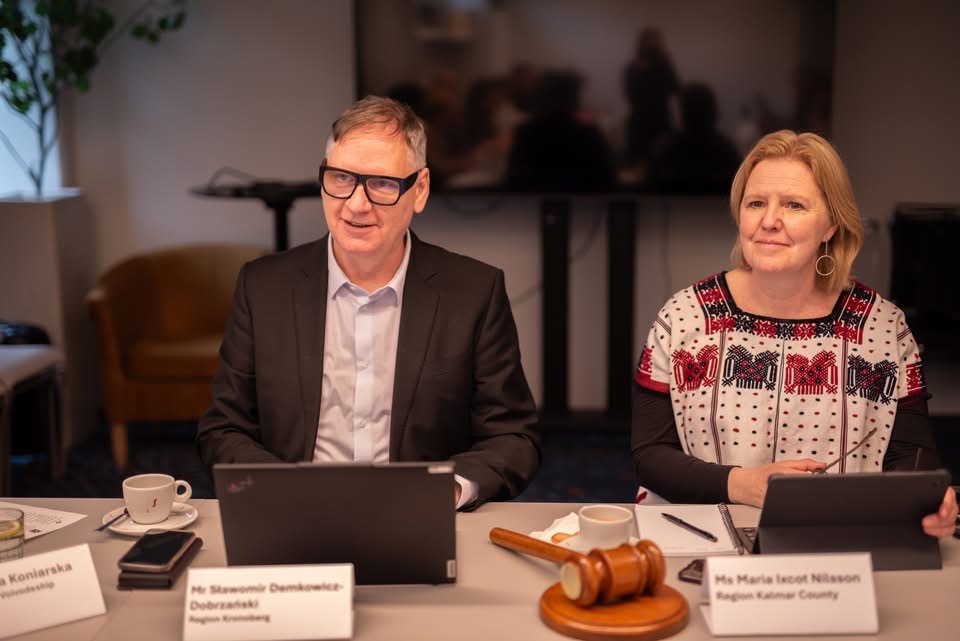
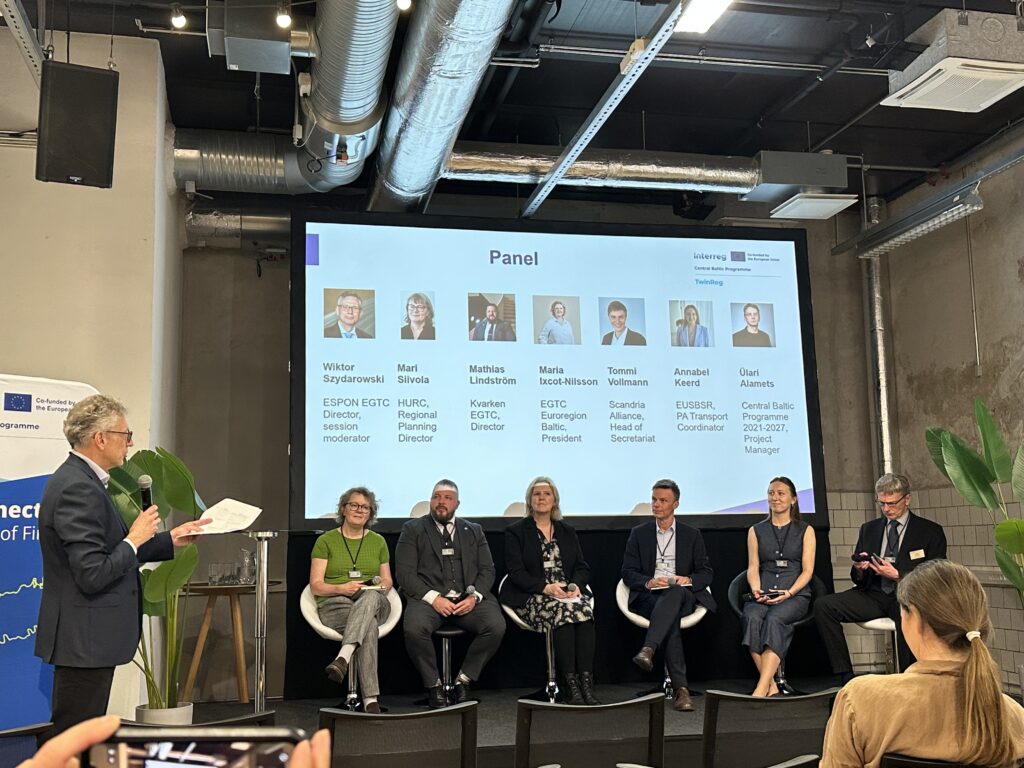
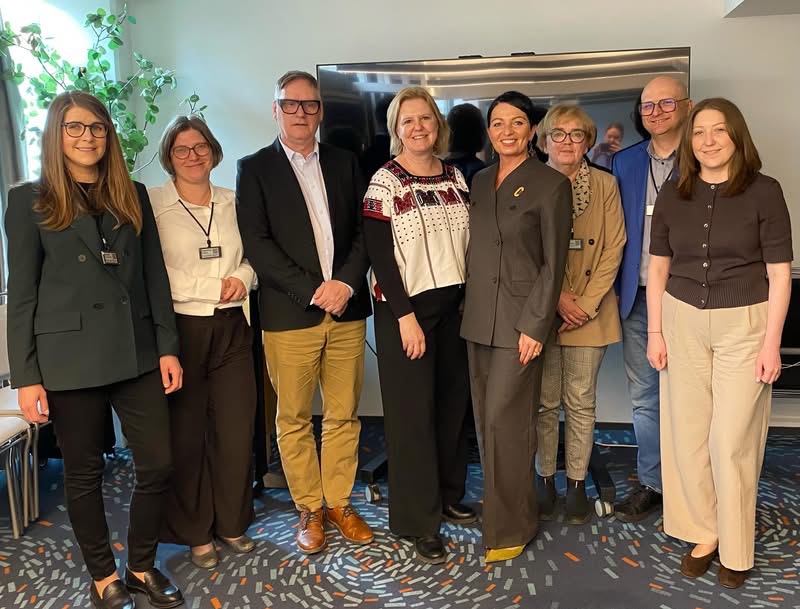
Member regions of the EGTC ERB gathered for the final pre-summer General Assembly session, held alongside the Annual Forum of the EU Strategy for the Baltic Sea Region in Tallinn, Estonia, to discuss the organisation’s ongoing development and adopt a joint statement.

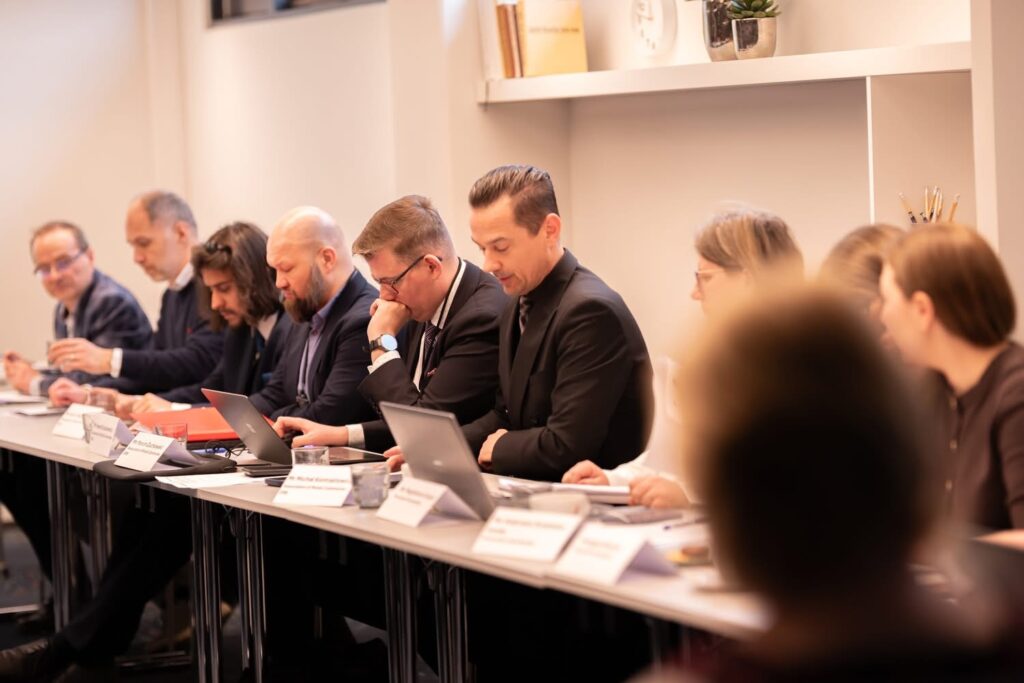
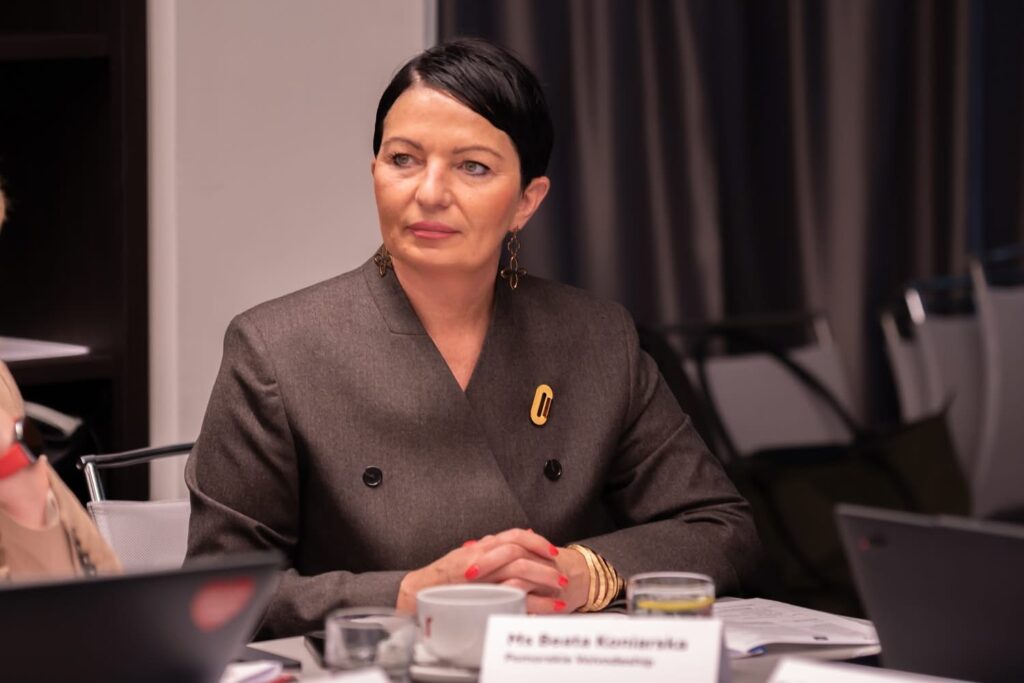
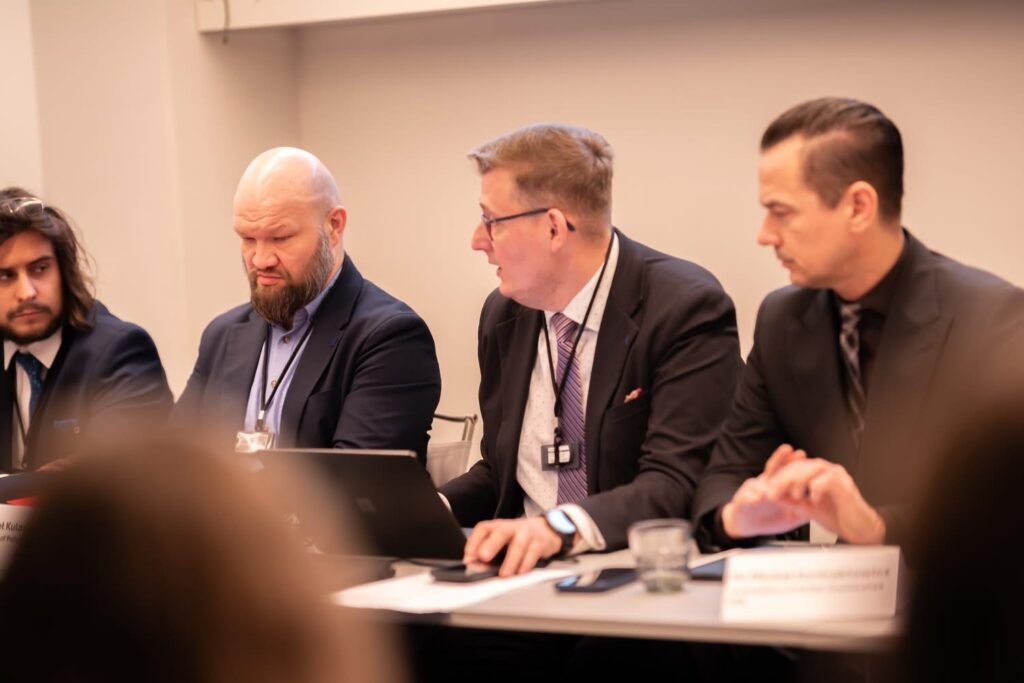
On 12 May 2026, the General Assembly of the EGTC Euroregion Baltic met in Tallinn, Estonia, on the occasion of the EUSBSR Annual Forum 2026 – the most important annual event dedicated to cooperation in the Baltic Sea Region.

The General Assembly focused on several important organisational and operational matters related to the ongoing development of the EGTC structure. Among the key topics discussed were the formal procedures connected with the establishment of the EGTC ERB bank account, the ongoing recruitment process for the position of Director of the organisation, as well as further organisational arrangements for the functioning of the EGTC.

During the meeting, the members of the General Assembly also adopted a joint statement – Cooperation is not just an opportunity – it’s our shield – highlighting the importance of cross-border cooperation as a key element of resilience in the Baltic Sea Region, addressing common challenges related to security, demographic change, climate transition, and multilevel governance

Statement adopted by the General Assembly of EGTC Euroregion Baltic:

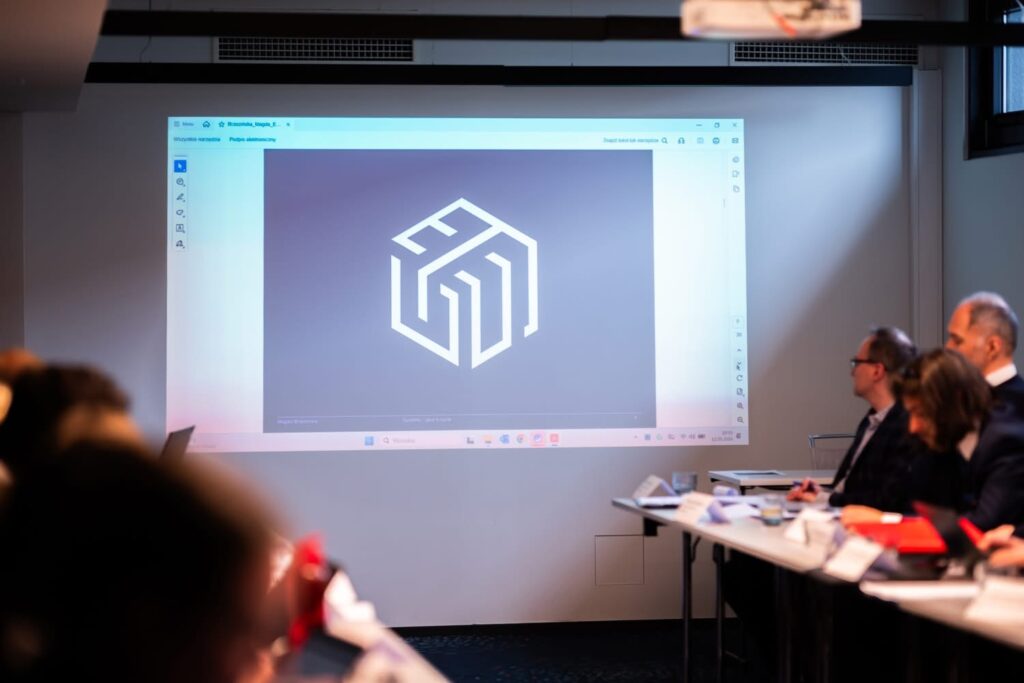
An important point of the meeting was also the presentation of 13 proposals for the new EGTC ERB logo, prepared by talented students of the Academy of Fine Arts in Gdańsk. The projects were presented and discussed by the members of the General Assembly, while the final selection of the new visual identity will be made in a separate procedure.

Alongside the General Assembly meeting, Euroregion Baltic was invited by the organisers to participate in the breakout session “Mind the Gap – permanent cross-border platforms as silo-breakers between regions and the EU”. The session focused on the role of cross-border cooperation platforms in bridging the persistent gap between the local and regional levels and the European Union level.

During the seminar, President of the EGTC ERB, Ms Maria Ixcot-Nilsson, presented the organisation’s experiences related to the transition from an informal cooperation network to a formal EGTC structure. The discussion brought together representatives of other EGTCs as well as informal cooperation networks from across the Baltic Sea Region.

The session highlighted how permanent cross-border platforms can act as intermediaries and “silo-breakers”, supporting stronger cooperation between regions and EU institutions. Participants discussed new ways of using such platforms to address common regional challenges and, together with the EU Strategy for the Baltic Sea Region, contribute to making the macro-region more unified, resilient, and sustainable.

The participation of Euroregion Baltic in the Annual Forum underlined the organisation’s growing role in shaping and strengthening territorial cooperation in the Baltic Sea Region.

Photos: APC Euroregion Batlic and own archives.


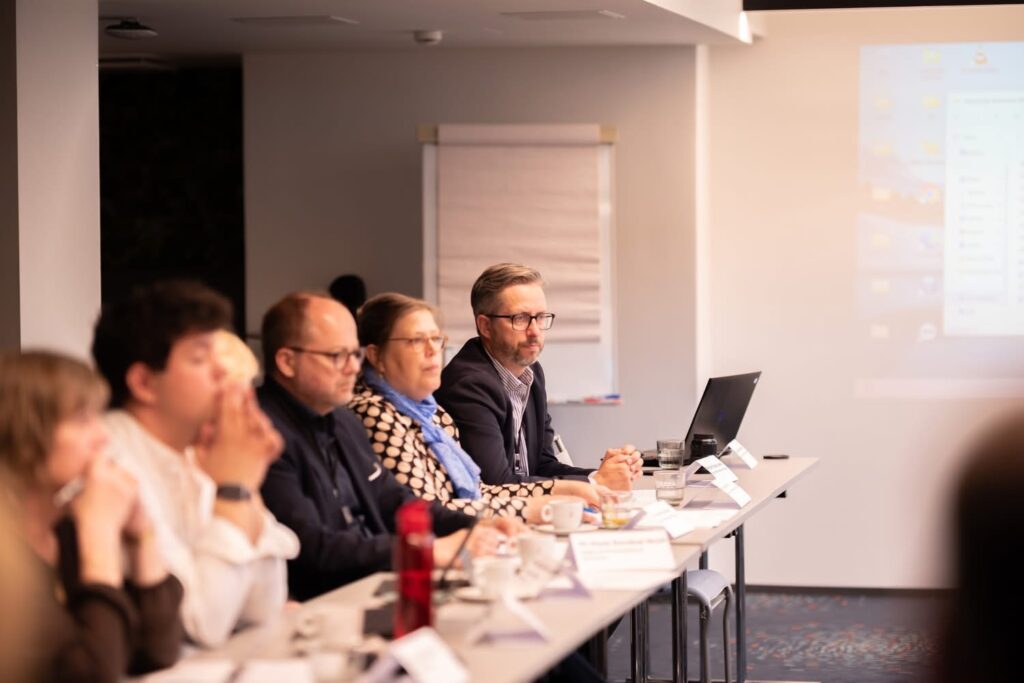
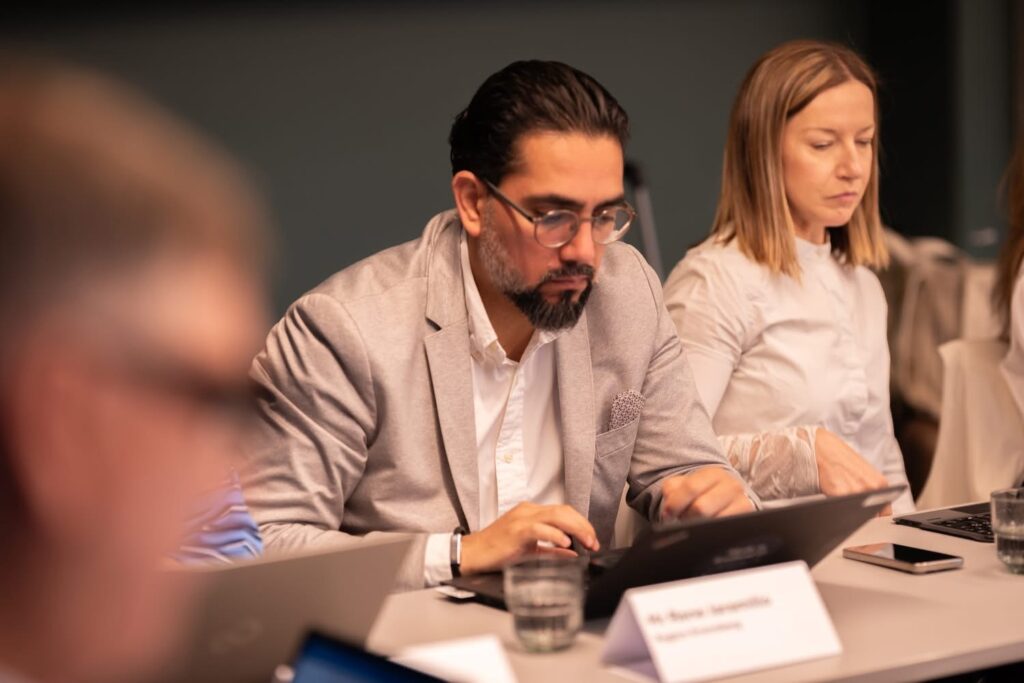
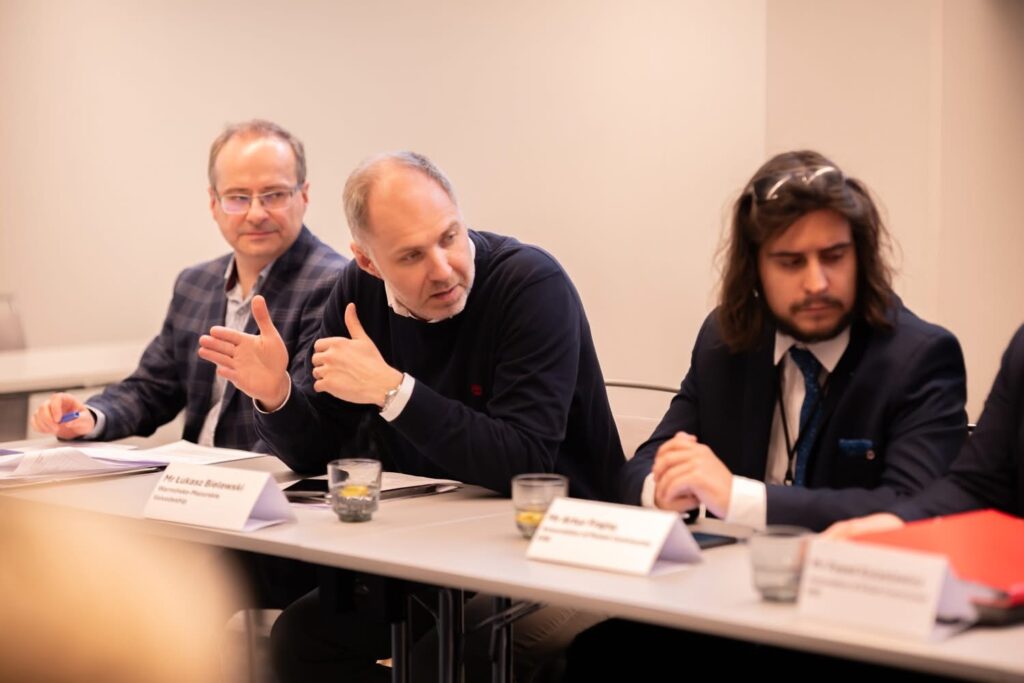
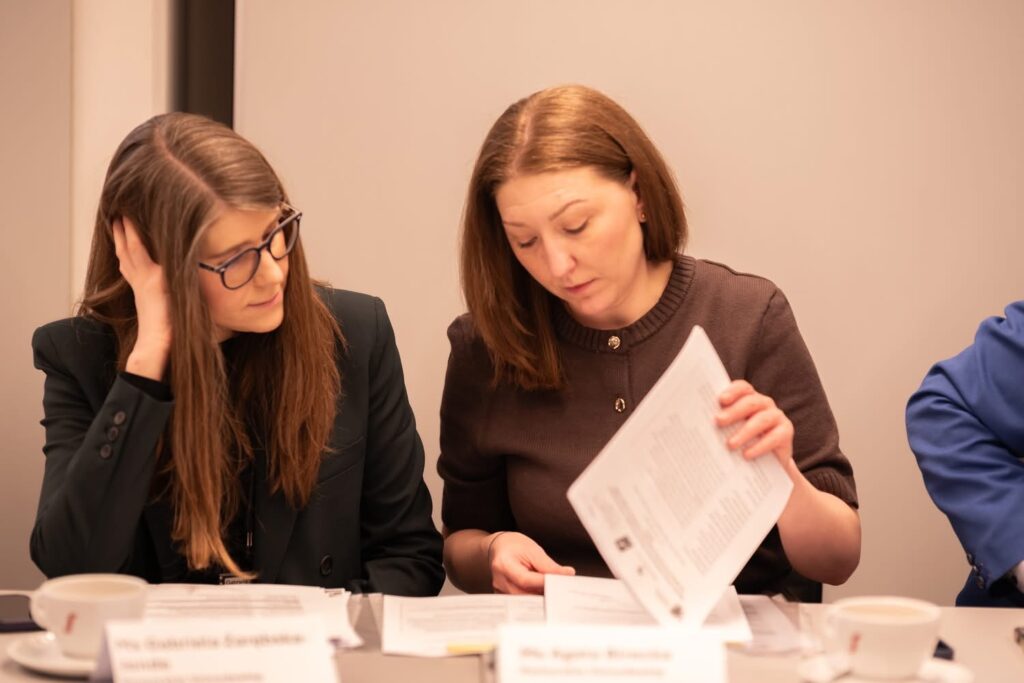
In early November 2025, WaterMan’s second EU roundtable was scheduled, with a clear agenda in place. But events took a somewhat different turn – opening up unexpected new opportunities to promote water recycling in the Baltic Sea region.

Already in January 2025, a first roundtable had been held to discuss the concerns and priorities of the WaterMan project with representatives of the EU administration. At that time, the debate focused on the opportunities that the planned revision of the Water Reuse Regulation (2020/741) might open up. The aim was to ensure that, in addition to its existing focus on Southern Europe and the agricultural use of recycled wastewater, the specific perspective of the Baltic Sea Region would be better reflected in future. Due to climate change, the humid north is also experiencing more frequent regional heatwaves with temporary water shortages, alternating with increasingly extreme rainfall events.

Rainwater recycling is a key aspect here. In the Baltic Sea Region, this means both tapping additional sources and opening up further uses for recycled water, including the irrigation of urban green spaces, process water in industry, and cleaning of sewer networks. Wherever drinking water quality is not required, different levels of fit-for-purpose water should be used for different applications in future, in order to stabilise local supply. The seven pilots and two feasibility studies carried out by WaterMan have shown how much of this can already be achieved with existing technologies today. What is still missing, however, are legally robust definitions of these different quality levels – ideally as part of a revised Water Reuse Regulation.

Politics in motion – making use of opportunities

With this, the agenda seemed clear when a smaller group of WaterMan partners once again travelled to Brussels in early November 2025 for a concluding roundtable. The aim was to build on the momentum created earlier in the year. But politics is often what happens while you are still making other plans. In such moments, the challenge is to turn changing constellations into something productive.

Loïc Charpentier, Head of Advocacy at the platform Water Europe, used his keynote to point to very recent political developments – and to the new opportunities that come with them. The expected recast of the Water Reuse Regulation will be delayed. Instead, the new EU Water Resilience Strategy is being pushed forward, and that may well mark the more significant turning point. For this strategy officially recognises that water scarcity increasingly affects humid regions as well, and it identifies water recycling as a central instrument for stabilising water supply in the future.

Legally binding definitions of water quality standards would, of course, still be highly desirable for this purpose. For now, however, the key task is to seize the new opportunities at hand: The Water Resilience Strategy is linked to the EU’s seven-year financial framework, and substantial funding is being made available.

Turning the focus from Brussels to the Member States

In political and strategic terms, WaterMan therefore has to reorient itself: away from Brussels and towards the Member States that manage these funds. WaterMan Lead Partner Tobias Facchini from Region Kalmar County is optimistic: “Based on the pilots and feasibility studies we have developed, we will convince the national authorities of the potential of a Baltic Sea Region-specific approach to water recycling. It can make a decisive contribution to securing sufficient volumes and thus strengthening the EU’s water resilience.”

At EU level, WaterMan has pushed the issue as far as is realistically possible for now. From here, the political focus needs to shift to the national and regional level. The next step is to spread the word, engage the relevant decision-makers, and get things moving on the ground – hands-on and local. That has always been one of WaterMan’s great strengths anyway.

A legally binding water quality classification system would, of course, still be highly desirable for this purpose. For now, however, the key task is to seize the new opportunities at hand: The Water Resilience Strategy is linked to the EU’s seven-year financial framework, and substantial funding is being made available.

Turning the focus from Brussels to the Member States

In political and strategic terms, WaterMan therefore has to reorient itself: away from Brussels and towards the Member States that manage these funds. WaterMan Lead Partner Tobias Facchini from Region Kalmar County is optimistic: “Based on the pilots and feasibility studies we have developed, we will convince the national authorities of the potential of a Baltic Sea Region-specific approach to water recycling. It can make a decisive contribution to securing sufficient volumes and thus strengthening the EU’s water resilience.”

At EU level, WaterMan has pushed the issue as far as is realistically possible for now. From here, the political focus needs to shift to the national and regional level. The next step is to spread the word, engage the relevant decision-makers, and get things moving on the ground – hands-on and local. That has always been one of WaterMan’s great strengths anyway.

» Watch the Roundtable Discussion in full length

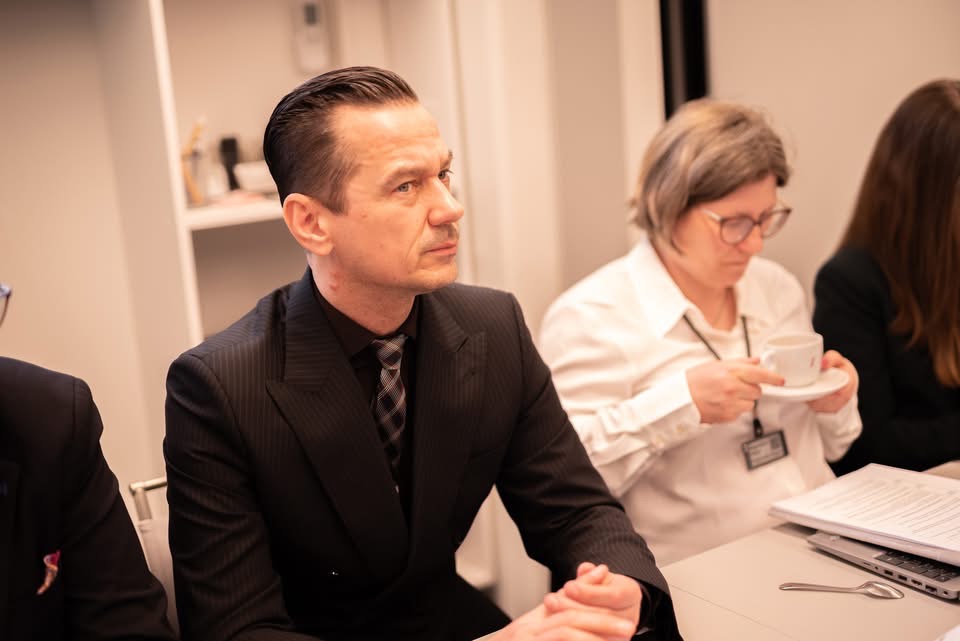
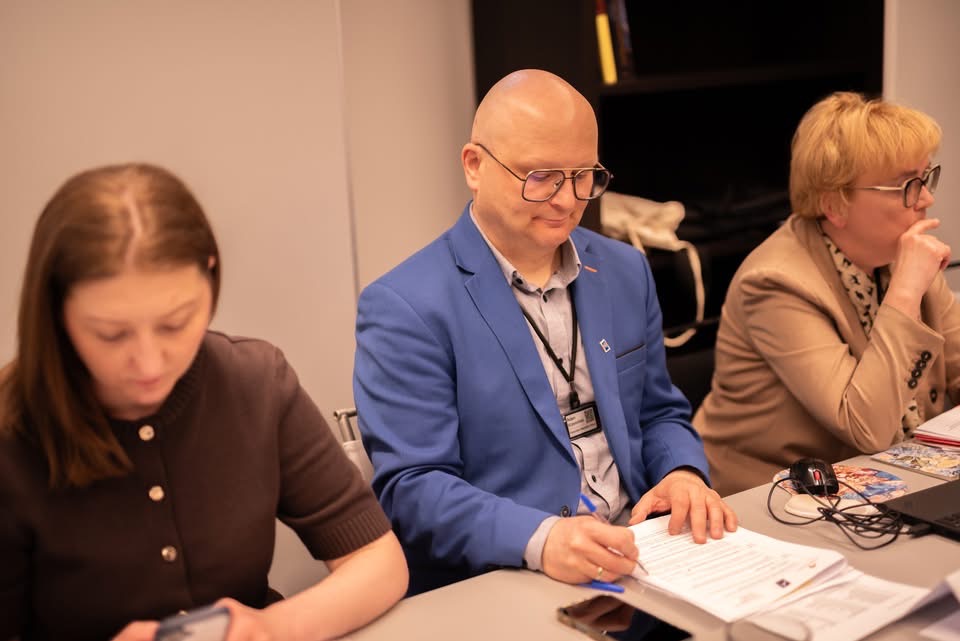
Kalmar (Sweden) became the meeting point for Euroregion Baltic on 17–18 March 2026, hosting the General Assembly of the EGTC Euroregion Baltic and the final meeting of the Euroregion Baltic Executive Board, marking the conclusion of the organisation’s previous structure.

During the meetings, the Presidency of Euroregion Baltic was officially transferred from the Pomorskie Voivodeship to the Region of Kalmar. Ms Maria Ixcot Nilsson took over as President of Euroregion Baltic, while Mr Michał Kontraktowicz assumed the role of Vice-President. The new leadership will guide the organisation through the first full year of its EGTC framework.

The General Assembly approved the Action Plan of the Kalmar Presidency for 2026–2027. The document sets out priorities aimed at strengthening Euroregion Baltic’s international presence, enhancing its role in EU policy discussions, and addressing key regional challenges, including demographic shifts in small municipalities, labour market trends, and access to public services.

The next General Assembly will take place on 11–13 May 2026 in Tallinn, held in connection with the EUSBSR Annual Forum.

A delegation from the Pomorskie Region, led by ERB President and Deputy Marshal of the Pomorskie Voivodeship – Leszek Bonna, paid a working visit to Sweden on 9–11 February as part of Pomorskie’s presidency in the Euroregion Baltic (ERB). The visit was of a courtesy nature and aimed at maintaining relations with partners and discussing key directions for future cooperation within the Baltic Sea Region.

During the visit to Växjö (Region Kronoberg), meetings were held with representatives of regional authorities and institutions responsible for regional development. The discussions focused primarily on political cooperation, while the Swedish partners also presented their experiences and challenges in the field of sustainable tourism.

In the Blekinge region, the agenda included topics related to transport and infrastructure, with particular emphasis on the Baltic Link corridor. This strategic route connects Sweden with continental Europe and forms part of the Baltic–Adriatic corridor. Representatives of Business Blekinge presented their activities carried out in cooperation with Poland, as well as initiatives supporting the development of enterprises in the region. It was noted that 2025 saw a number of bilateral meetings, including a matchmaking event in Blekinge, which contributed to establishing business contacts and agreements between companies from Blekinge and Poland.

Discussions also covered tourism development, including an EU co-financed project focused on international cycling routes across Europe. An important topic was energy security and the stability of supply in the Blekinge region in the context of cooperation within the Baltic Sea Region. The Swedish side highlighted the importance of cooperation with Poland, pointing to a significant increase in trade exchange across the Baltic Sea in recent years and its growing importance also for the tourism sector.

During the meeting in the Kalmar region, Swedish representatives presented the administrative structure of the region, the scope of local government competences, and the model of cooperation with municipalities and local institutions. This provided a basis for further discussion comparing governance systems in Poland and Sweden.

Tourism development was also an important element of the discussions. The Swedish side presented regional priorities related to sustainable tourism, promotion of cultural heritage, and extending the tourist season. The importance of international cooperation in tourism within the Baltic Sea Region was emphasized, including the potential for further collaboration with Polish partners.

The meetings also addressed broader issues related to security, including regional resilience to crisis situations. The importance of coordination at both regional and supra-regional levels was underlined, as well as the role of international cooperation in strengthening stability and resilience across regions.


The content of this website is the sole responsibility of the author and can in no way be taken to reflect the views of the European Union, the Managing Authority or the Joint Secretariat of the South Baltic Cross-border Cooperation Programme 2014-2020. The project UMBRELLA is partly financed from the Interreg South Baltic Programme 2014-2020 through the European Regional Development Fund.