- Home
- News
- Water Recycling Toolbox
- Use cases & technical-organisational solutions
- Stormwater recycling for fountain operation and greenery irrigation
- Diverse utilisation of stormwater with the aid of “multi-dams”
- Stormwater retention pond for water recycling in municipal services
- Rain garden for the greening of a public car park
- Recycling municipal wastewater for irrigating green spaces
- Recycling municipal wastewater for agricultural use
- Recycling municipal wastewater for commercial use
- Recycling treated wastewater for hydrogen production
- Recycling treated wastewater in public buildings
- Recycling public swimming pool water for canal flushing
- Regional pathways & action plans
- Practical guidelines and tools
- Best practices outside the Baltic Sea Region
- Policy Dialogue
- IN THE LOOP – our three-edition guide to get started with water recycling
- Water Recycling Helpdesk
- Use cases & technical-organisational solutions
Rain garden for the greening of a public car park
Brief intro to the WaterMan pilot measure
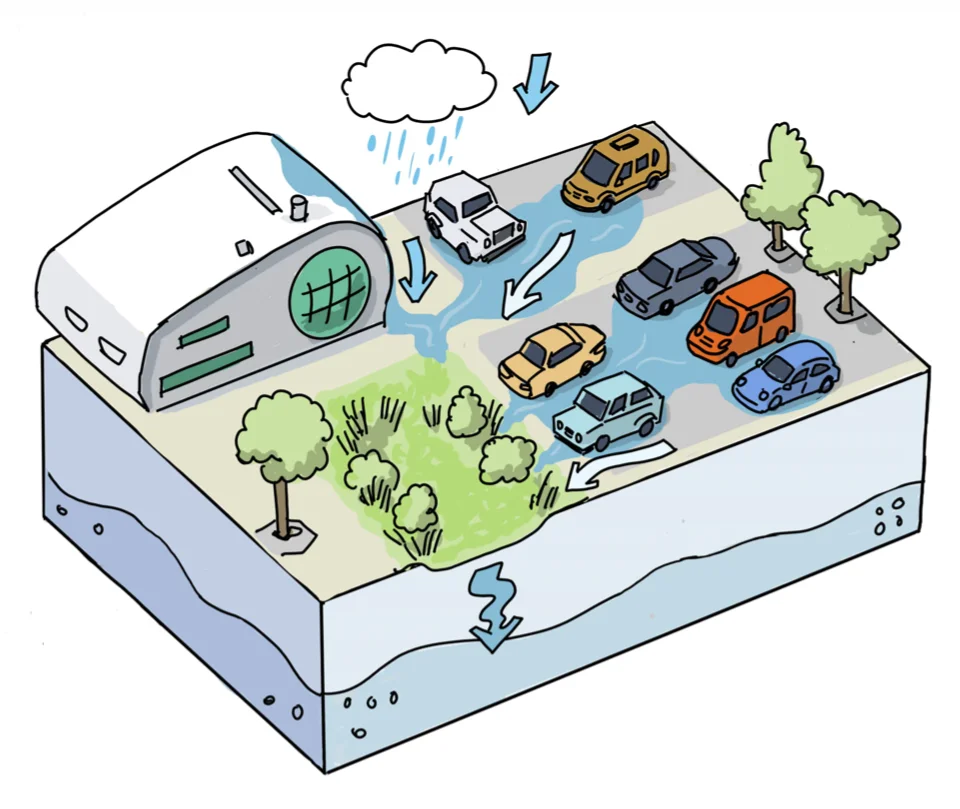
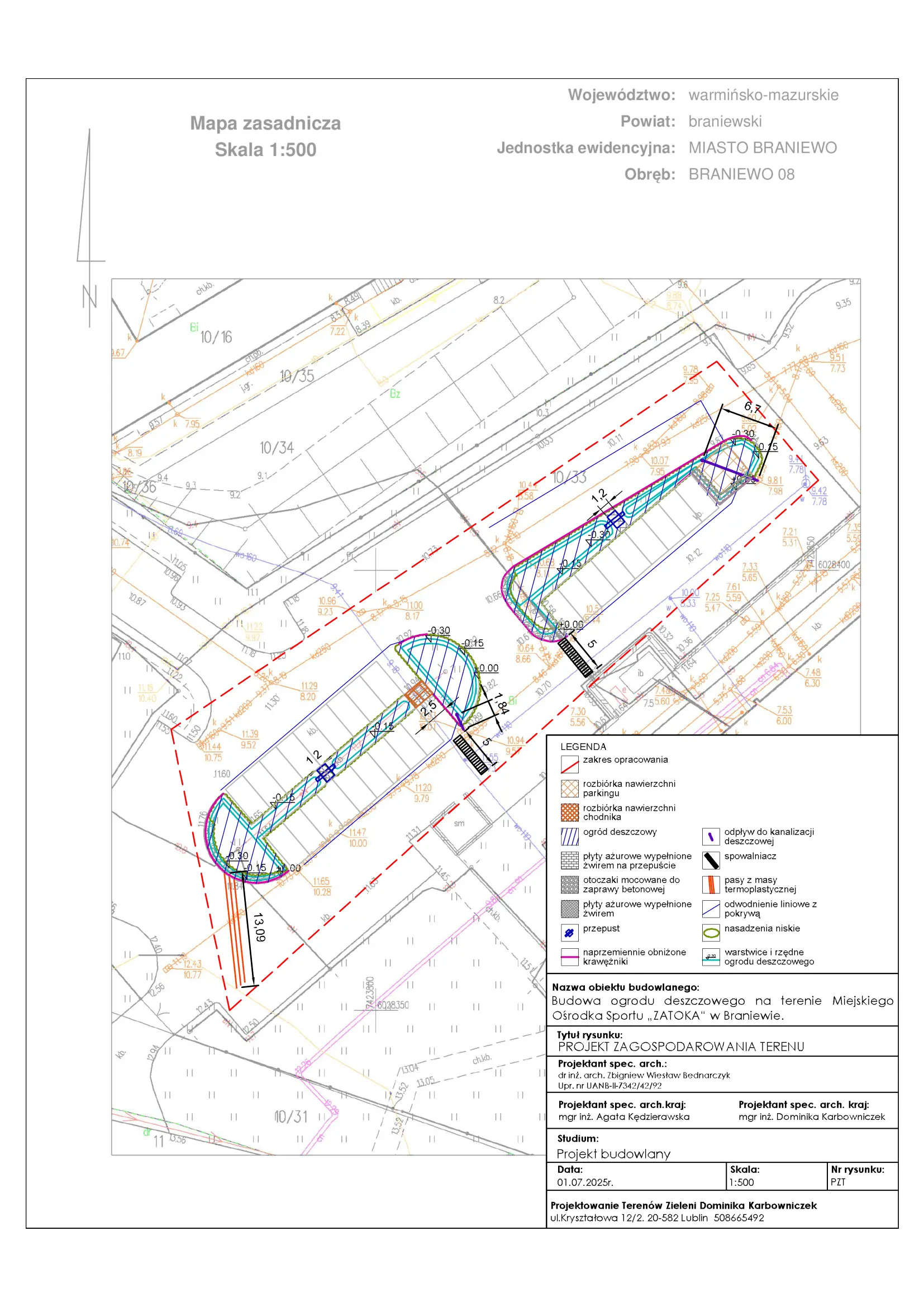
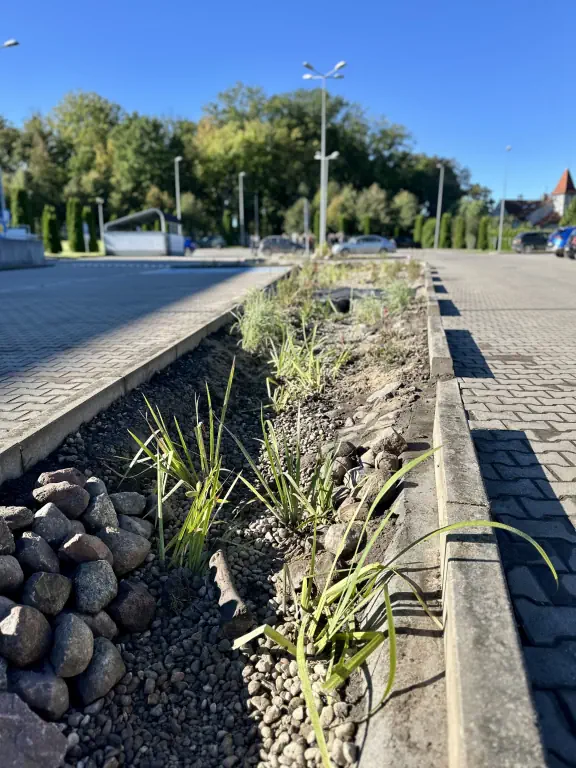
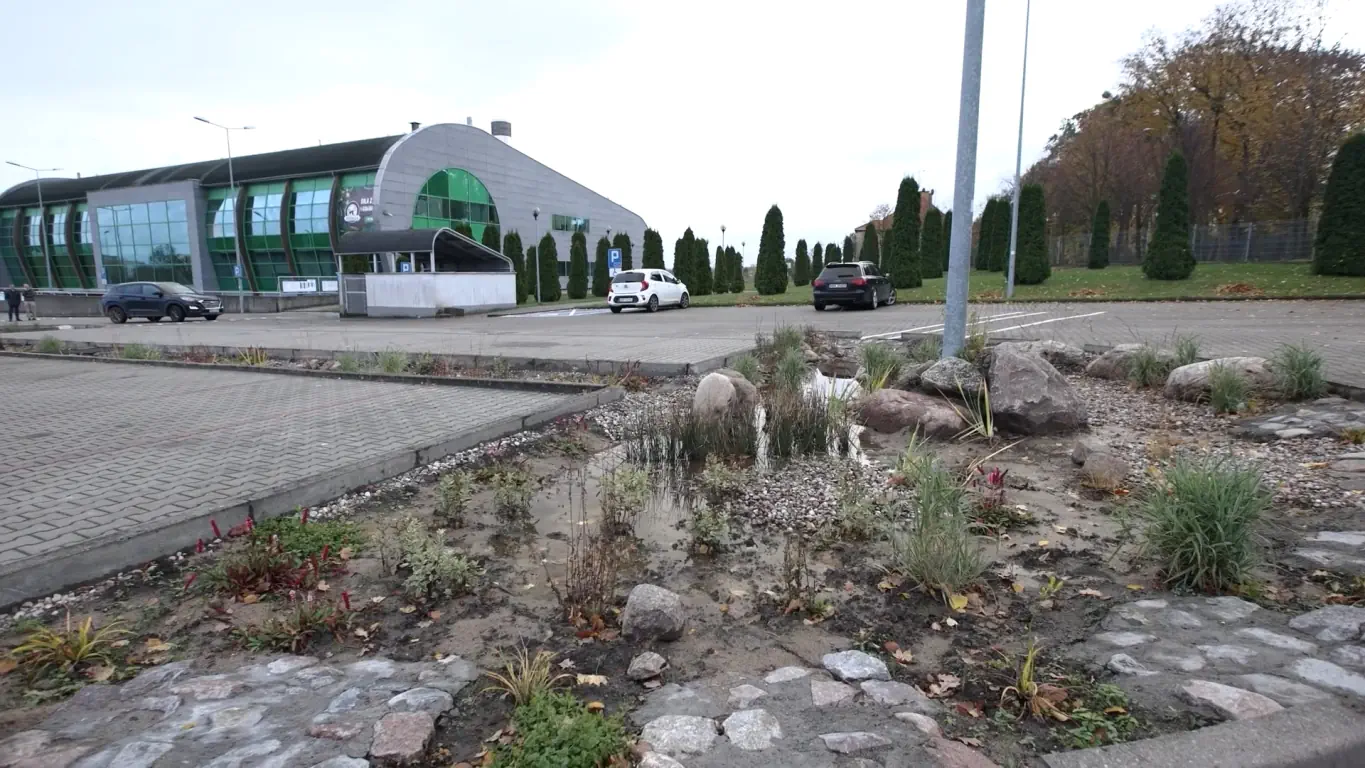
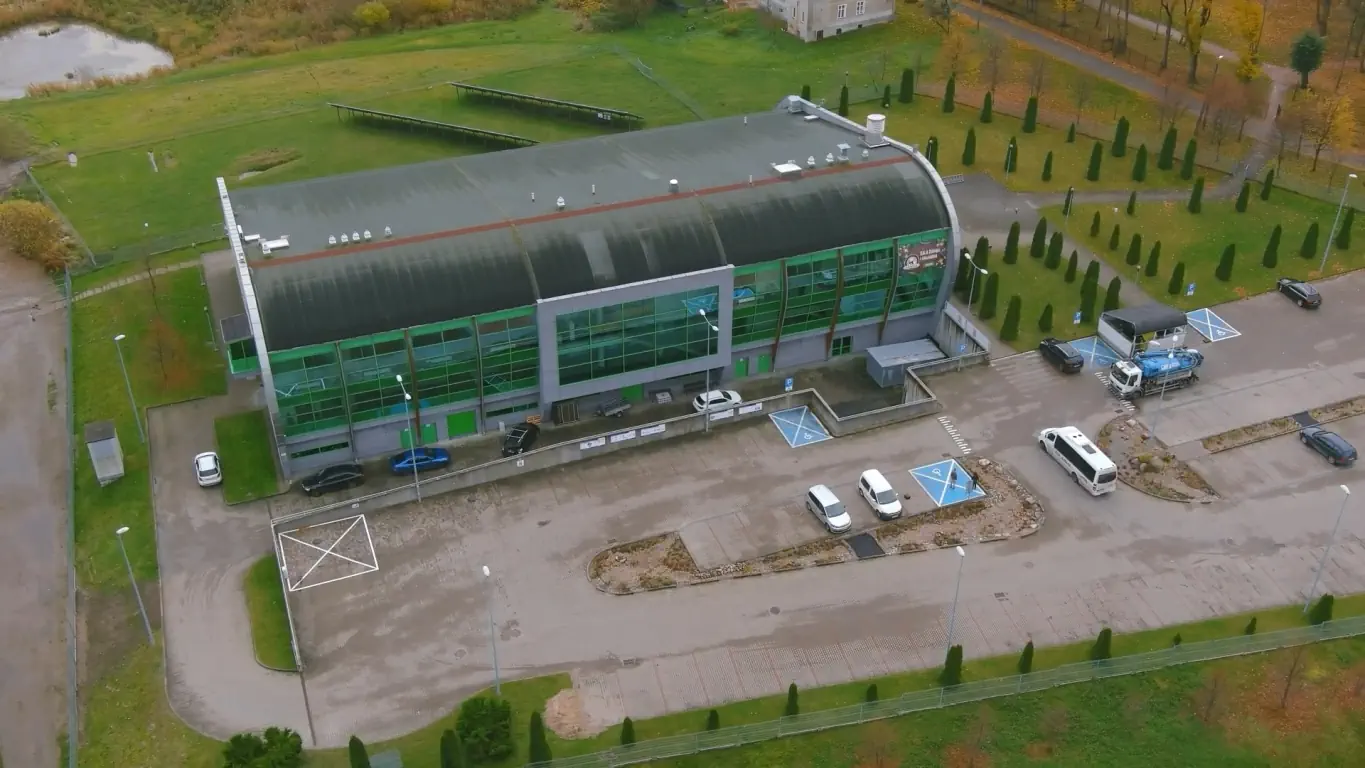
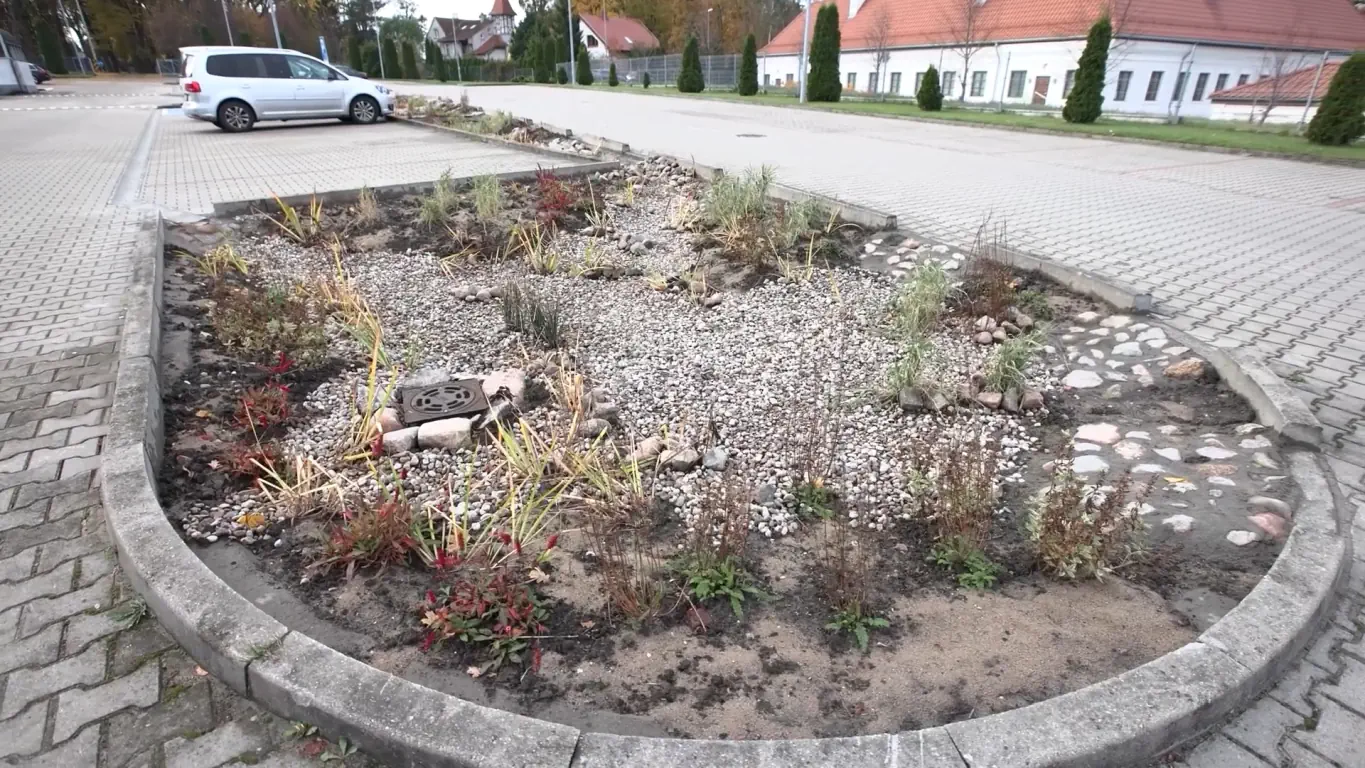
In Braniewo, Poland, a “rain garden” was created in the car park of the local swimming pool. A part of the area has been unsealed and redesigned by planting vegetation and by creating a catch basin so that stormwater running off the asphalt and the roof of the indoor swimming pool is retained on site to infiltrate gradually into the soil – instead of increasing pressure on the sewage system.
The rain garden is able to store at least 30 millimetres of precipitation per square metre (following standards used in Gdańsk). This will provide sufficient water to the plants in the car park, naturally promote greening and reduce the need for additional irrigation with drinking water. The rain garden also delivers wider ecosystem and urban-development benefits: it reduces the effect of urban heat islands, increases biodiversity and treats of stormwater through sedimentation, filtration, sorption, and the uptake of biogenic compounds by the plants. Aesthetic and educational value comes with is, too.
- Type of pilot measure: Real-world implementation
- Location: Braniewo (Poland)
- Water source: Stormwater
- Type of treatment: Natural self-purification processes (sedimentation, filtration, sorption, biodegradation) enhanced by eco-engineering design
- Target water quality: Natural stormwater quality
- Utilisation: Irrigation of plants in the car park
- Return to natural cycle: Increased infiltration and evapotranspiration
- Responsible: Braniewo Municipality / Gdańsk University of Technology
- Operational & open for visitors: Since Sept 2025
Get inspired by "The Low-Hanging Fruit of a Rain Garden"
In the past, the car park in front of the indoor swimming pool in Braniewo, Poland, was heavily sealed – an urban heat island in summer and, in spring, an exacerbating factor for flooding. Today, a rain garden stores water, cools the surroundings, and enhances the area. So simple, so important, so transferable across the entire Baltic Sea Region. Read the full story behind the pilot measure...
In-depth information on the pilot measure
Pilot measure overview (final status) These slides present the final shape of the pilot measure, including its context, implementation, and key lessons learned.
Download slides
The evolution of the concept (until today) These slides give an account of the work process behind the chosen technical-organisational concept, incl. considerations, recommendations and decisions taken at different stages. Scroll through the slides to chronologically follow the iterative “development journey” of the pilot measure step-by-step, from the initial idea to its present status!
Download slides
Collection of further materials
- Rain garden in Braniewo: Technical specification (in Polish)Download file
- Rain garden in Braniewo: Base maps (in Polish)Download file
- Poster with visualisation & basic info on the pilot measureDownload file
Would you like to get further info on this use case? Contact us!
Jerzy Butkiewicz
jerzy.butkiewicz@braniewo.pl
+48 531 120 930
Magdalena Gajewska
mgaj@pg.edu.pl
+48 58 347 15 09
Get to know our
other Helpdesk agents
